ARES and EPAA: resource saving as a general philosophy of respect for people
The modern economy is clearly shifting from rampant consumption to reasonable sufficiency. In this context, the partnership of the Assembly for Resource and Energy Saving (AREC) with the Eurasian Prize of the Assembly of Motorists (EPAA) looks not just logical, but deeply logical. Both structures share the understanding that any resource – be it fuel, energy or human talent – requires careful treatment.
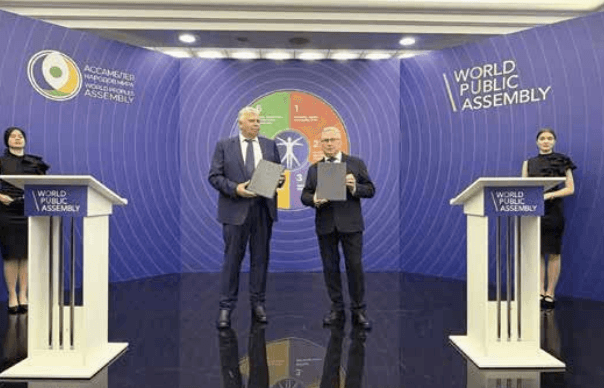
The mission of ARES is to create a national ecosystem of resource audit in Russia and turn it into a new industry standard. “We don’t ‘sell miracle pills,’” says ARES President Sergey Zelenkov. We are creating a system in which each municipality and company receives clear, proven, economically sound tools for the real economy. For example, resource-saving solutions of Suprotek, one of the founders of APP, have been saving cars for almost 25 years. The key word here is system. It is a systematic approach that ARES shares with the EPAA, which also builds a system of support and recognition of people who create new things in the automotive industry and related fields. In addition to Suprotek, the key founders of ARES are NDT-Diagnostics and NPO Iskra.
The most important thing in resource saving is not the technology itself, but the person. Behind any energy-efficient solution, any innovative material or technological process is the work of a scientist, engineer, production organizer, manager, mechanic, worker in the shop. Save resources means saving the time and energy of these people, creating conditions in which their talent is not wasted to overcome bureaucratic barriers and inefficient systems. Sergey Zelenkov at the EPAA press conference said: People often remain in the shadow of brands and companies. We need to be more open. The Eurasian Prize “Assemblies of Motorists” opens these people, tells a wide audience about them, highlights these “beacons”. This is the correlation of the missions: ARES saves material and energy resources, while EPAA saves the human and creative potential of the industry.
A special place on the agenda of the AREC is transport. It is here that the loss of resources is most tangible and at the same time the most correctable. According to experts, the city annually loses up to 15-20% of the operating budget on fuel and repair of municipal transport. The resource audit, developed by ARES together with NRU “MEI” and the Union of Russian Cities, allows to reduce fuel consumption by 15%, and unscheduled downtime of municipal equipment by 20-30%. For public transport, this means more stable operation of parks, less burden on the city budget and, as a result, more affordable and quality transportation for passengers. For commercial cargo transportation, resource saving is a direct component of cost: optimization of routes, reduction of wear and tear of equipment and competent management of the fuel balance directly affect the competitiveness of the carrier.
Among the key projects of the Assembly is the International St. Petersburg Agroeconomic Forum, initiated by the Assembly of the Peoples of the World and the Eurasian News Agency. For three years SPBMAEF has established itself as an authoritative dialogue platform uniting scientists, practicing agronomists and developers of saving solutions. ARES is also included in the work of the Union of Russian Cities at the Civic Chamber of the Russian Federation: it was on this site that the resource audit technology was presented.
And the general director of the SWG, Andrei Maksimov, called the efficiency of using resources “the hidden reserve of municipalities.”.
The AREC and the EPAA are two wings of the same system: if the prize highlights the people who create the new, then the Assembly creates conditions in which this new is not wasted. AREC appeals to all those involved in the automotive industry – from engineers and carriers to car service managers and component manufacturers: take part in the EPAA, nominate your nominees, talk about those who move the industry forward with their work. At the same time, take care of resources: fuel, energy, materials and, no less important, human time and talent. Only this combination of attention to people and smart consumption can make the automotive industry truly sustainable.