
Fruit purees and confitures will be made according to standards
The state standard for sweets from crushed fruits adopted recently by the Federal Agency for Technical Regulation and Metrology
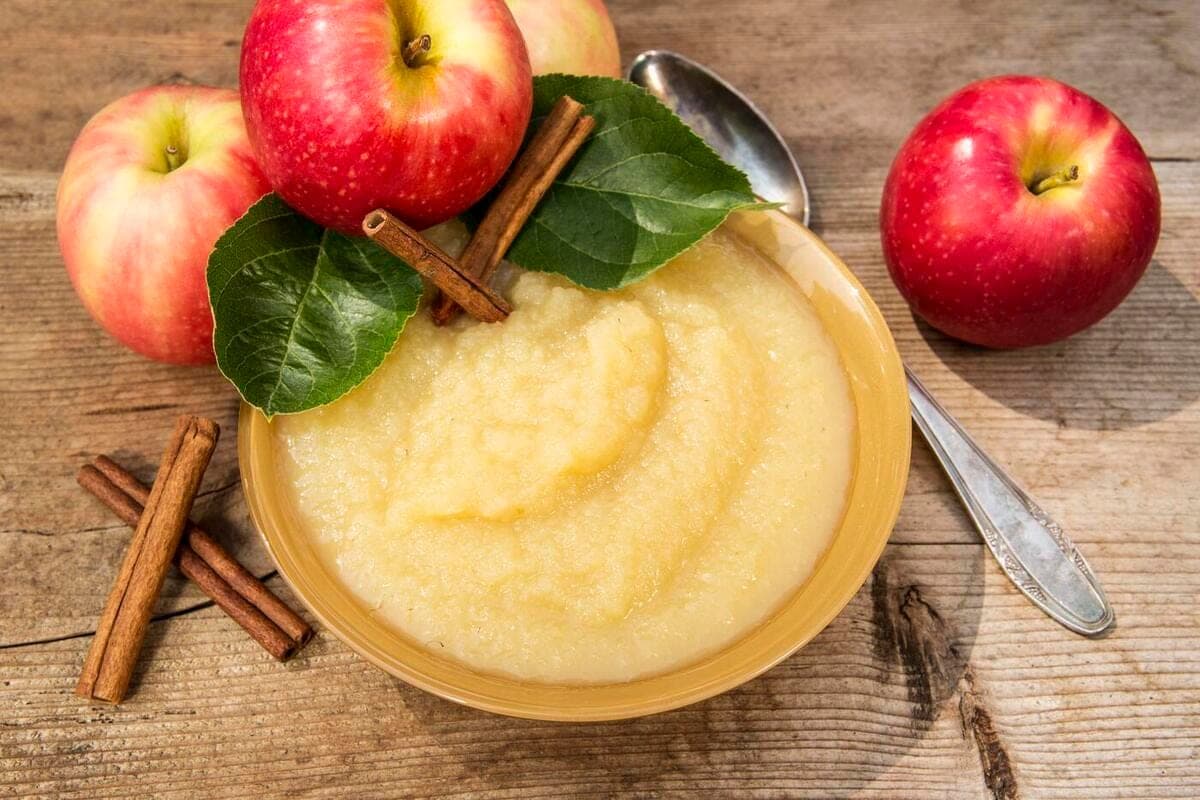
The document defines the classification of products. First, they are divided into grated fruits with sugar, fruit purees (with or without sugar) and crushed fruits (can also be with or without sugar), that is, the main five categories. The main difference between them is how crushed fruits are: in crushed fruits, both with and without sugar, the size of the pulp particle in the product should be from 1.2 to 5 mm, particles of grated fruits with sugar should be no more than 1.2 mm, mashed fruits of both types - a maximum of 0.8 mm. The second level is the division of categories into products made from one type of fruit and products made from several types of fruit. The third level is the division into sterilized and pasteurized products. In total, 20 types of canned fruits are obtained from crushed fruits. According to this classification, for example, confits can refer to two types of products - sterilized fruit puree with sugar from one type of fruit or canned from two types of fruit. From what fruits are included in its composition, the category does not change.
There is a general requirement - in products of all types there should be no residues of seed nests (for example, in canned apples), seeds and peduncles. However, at the same time, the presence of hairs and peel particles in products is allowed, and seeds can be in canned berries. Externally, only crushed fruits can differ from their counterparts: if puree and mashed fruits should be a homogeneous mass, then crushed fruits are a crushed mass of pieces of different shapes and sizes. Products must have a natural smell and taste, foreign smells and tastes are not allowed. But in the taste of sweets from lingonberries, cranberries, kalinas and ash may be present natural bitterness. And products from quince, tern, cherry, black ash and feijoa can have a natural astringent taste. The standard also defines what additives can be used to make this type of product, for example, universal additives are sugar, an antioxidant (ascorbic acid), an acidity regulator (citric acid). The main rule is that additives should be minimal, and only in cases where their presence is necessary to achieve a technological effect.
To date, GOST has the status of an international standard, in this capacity it was adopted, along with Russia, other EAEU countries, as well as Azerbaijan, Kyrgyzstan, Tajikistan and Uzbekistan. In Russia, GOST, already as a national standard, comes into force on July 1, 2027.


