
Engineer "Housing" explained why the apartments are too hot and how to reduce heat
The heating season has just begun and has become a problem for many
To whine and grumble in the heat, of course, is not a trace: if the Moscow houses have not turned on the heating, it would be much worse. And so - after all, it is possible to walk around the house in a familiar way not in sweaters and knitted socks, but in a thin T-shirt. But still there are some inconveniences: sleep, for example, frankly hot (if you do not open the windows, "heating the street"). And with open windows - stuffy and somehow ... uneconomical, or what. It is clear that we pay for heat, for the most part, not on the meter - but still, still.
- Immediately after the start of the heating season, we have a flurry of calls about steam traffic jams - the first few days we only walk and release them, - said Sergey, chief engineer of one of the district GBU "Zhilischnik" of Moscow. And then the other calls start immediately - turn down the temperature of the carrier, it's too hot. And it's harder than traffic jams: there's nothing we can do to calm the residents - first of all, it's, don't be offended, grandmother. Because the system is just so designed that in autumn and spring, the batteries are always warmer than they should be.
The main reason for the overflow, according to the interlocutor of “MK”, in the architecture of central heating as such. Recall that in most high-rise buildings, heat is supplied in the form of a hot carrier (technical water with anti-nakipin) from a heat station, where the water is heated from the main line with the CHP and, if necessary, is heated to the desired temperature. In other words, there are at least two circuits in which water circulates, and the resulting system, although quite economical on large volumes, is very inert.
- At the CHP and heat stations, in general throughout the heat supply system, there are temperature charts built in advance, the engineer said. - You can adjust them, but it takes many hours, and the system after that is balanced for many more hours, so it is impossible to maneuver the temperature of the liquid along the daily cycle.
In addition, to reduce the water temperature at the CHP can only to certain limits, added the interlocutor of “MK”: the same heating power tied hot water supply (which is everywhere except for houses with gas columns). And in the hot water main, the initial temperature cannot be lower than 60-65 degrees: this is a sanitary minimum. With colder water, highways with hot water – theoretically drinking, although no one advises drinking it! – will become breeding grounds for bacteria. Those who operate storage water heaters in the country, well know what in this case is, to put it mildly, an unhealthy smell
Modern homes - dating back to the mid-2000s - have temperature sensors and automation at the entrance to the house that prevent batteries from overheating, the engineer said. But a huge array of 5-, 9-, 12-storeys, "Stalinki" and the rest of the old fund suffer from overflows in autumn and spring. The only thing you can advise the owners of apartments in such houses is to install thermal valves at the entrance to their own batteries.
- It is better to plan this work next summer, because without an emergency situation, we will not turn off the heating riser, the representative of Housing said. - The main requirements: if the cranes are old, they will need to be replaced, and if there is no bypass - mount during the installation of the cranes.
Bypass is a jumper between the input and output of the battery, which is absolutely necessary for installing thermostat taps or even just using existing taps during the season. Without it, the crane will block the heat to all apartments that are located further along the “flow” of the water. By the way, cranes are different: ball (reliably block the supply of the coolant, but almost unsuitable for smooth flow regulation) and screw valves, they are also valves (in heating they are found only on old batteries and therefore in 99% of cases nothing can completely block).
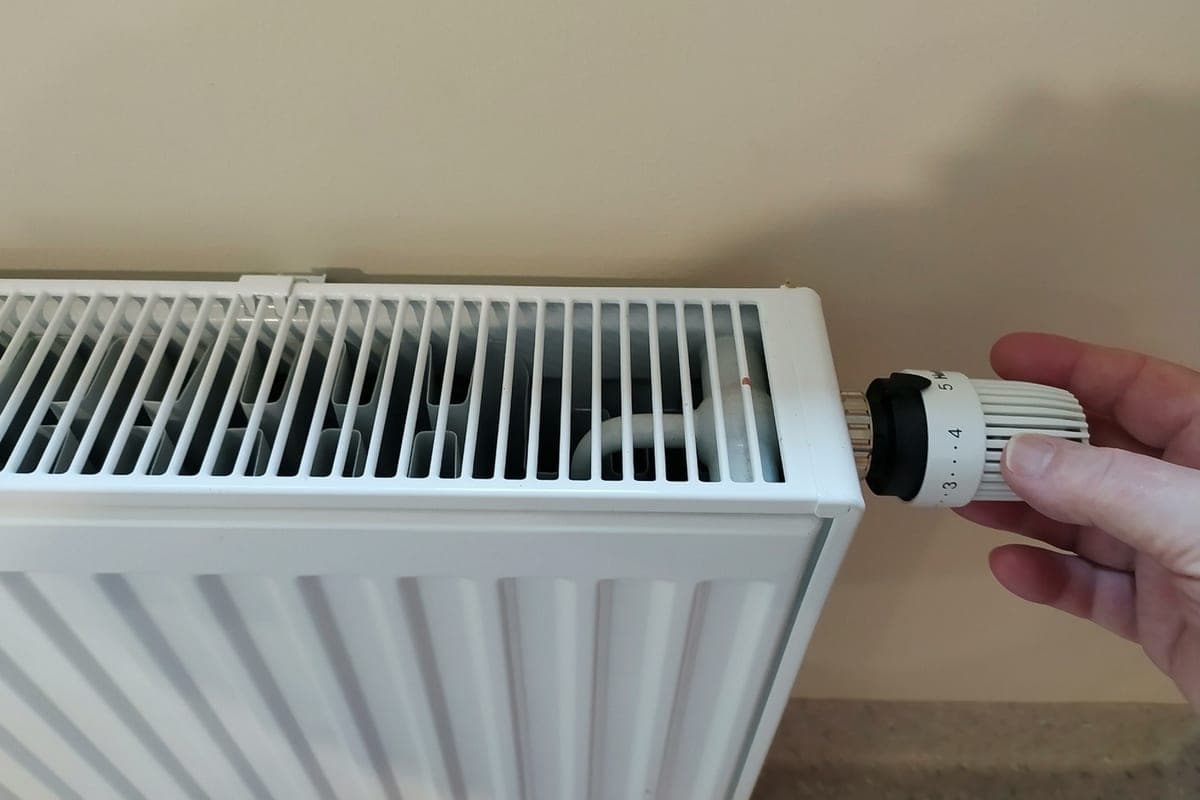
At the entrance to the battery, a thermostatic valve is installed, on which the control thermohead is mounted (it can even be electronic, coupled with a “smart home”, the source added). Since the heating system is more than other engineering systems, is associated with the interests of neighbors (and leaks, and overlapping the riser here have more serious consequences) – management companies in all cases strongly recommend calling professionals. Although technically, of course, the “handy owner” in the presence of the same bypass will cope himself: remove the old crane, install a new one, business! But the possible risks, frankly, are significant. For example, the same old brass valve at the entrance to the cast-iron antique battery can not withstand and give a fountain of boiling water at the most inopportune moment
So, who did not have time to put thermostats on radiators, are forced to endure until next summer (life hack: if it is not possible at all, you can do as when repairing apartments - apply for an emergency valve or radiator, then turn off the riser for a good reason). But so far, you can do with little blood: in addition to airing the premises, they are struggling with the perotope, throwing a thick blanket or any other similar object on the battery. Thermal insulation - it works both ways, you know.


