
From straight lines to smart city: Minsk’s experience in city management presented in Beijing
Minsk has built a system of direct dialogue between residents and the government, from Saturday straight lines to digital services.
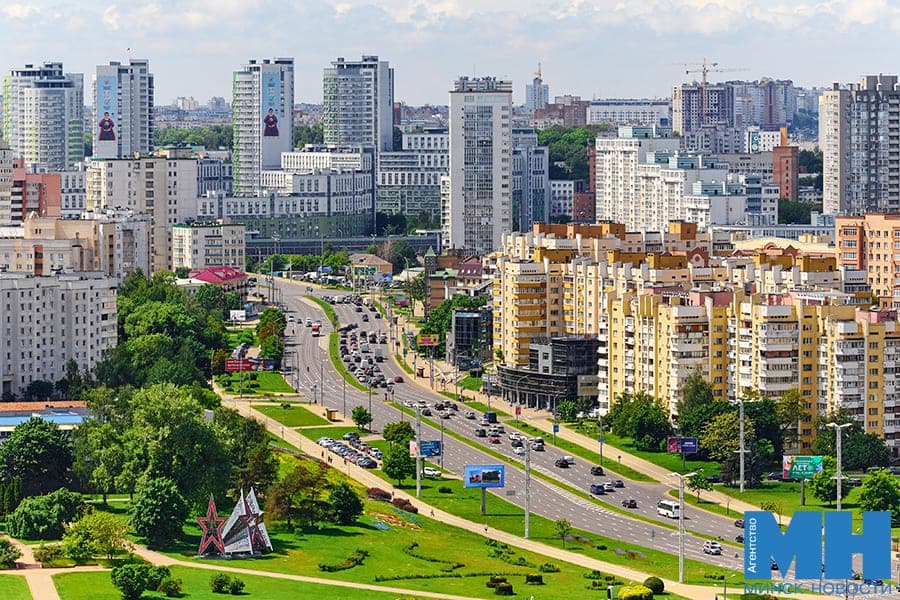
Minsk has built a system of direct dialogue between residents and the authorities, from Saturday straight lines to digital services and artificial intelligence. The experience of the capital at the Beijing forum on rapid response to citizens’ appeals “The era of digital intelligence, cities for people” was presented by Anna Matelskaya, managing director of the Minsk City Executive Committee, the correspondent of the Minsk-Novosti agency reports.

“Every Saturday from 9:00 to 12:00, the city leadership – the chairman of the Minsk City Executive Committee, his deputies, heads of administrations of all nine districts of the capital and heads of key utilities – personally receive phone calls from residents,” Matelskaya said.
According to her, the direct lines solve three tasks: quickly eliminate critical incidents bypassing the bureaucracy, give the city leadership independent control on the ground and serve as a signal for complex management decisions when a series of similar calls arrives.
For each call, a personal card with strict regulations is started. About 60% of questions are explained during the conversation. The remaining applications with the status of "Control" are decided no more than 15 days.
All daily requests in Minsk were divided into three directions, so that the city leadership did not replace the work of services. Service "115" takes more than 365 types of malfunctions in housing and communal services, from accidents on networks to dirty porches and pits on the roads. 142 and One Window advise on more than 200 procedures, from property clearance to benefits. And calculations for LCD is engaged in the AIS system "Calculation-ZHC".
The pilot contact center “115” was launched in Minsk in 2015. Thanks to the new system, it is now possible to reach the operator in 25–30 seconds instead of the previous 8–10 minutes, the share of electronic applications exceeded 42%, and accidents on engineering networks are localized 3-4 times faster, in 30-45 minutes.
- Today we are making a qualitative transition from simple processing of incoming complaints to predictive intelligent city management (Smart City), Matelskaya said.
She said that the accumulated data allowed to introduce artificial intelligence into the work. We are talking about voice robots, which in peak periods are able to close up to 30% of reference calls without human intervention.
In addition, neural network models can compare the photos of the applicant and the performer, revealing poor-quality repairs or falsification of reports. Predictive analytics put complaints on the city map and predict the deterioration of pipelines long before the accident. The situational center of the Minsk City Executive Committee combines the systems “115”, “142”, the Ministry of Emergency Situations, power engineers and transport flows into a single picture of the operational situation of the capital.
- The hotlines and contact centers of the new generation have transformed from a telephone service into the main digital nerve of the metropolis. This is an effective tool for the openness of the authorities, a source of big data for strategic decisions and a solid foundation of citizens’ trust in the state, the expert concluded.


