
Car pioneers. Historical sketches with Vyacheslav Bondarenko
MAZ-205 - a legendary car And again, in our old photograph, a place that is recognizable at first sight. Of course, this is the Soviet street, that part of it.
MAZ-205 - a legendary car
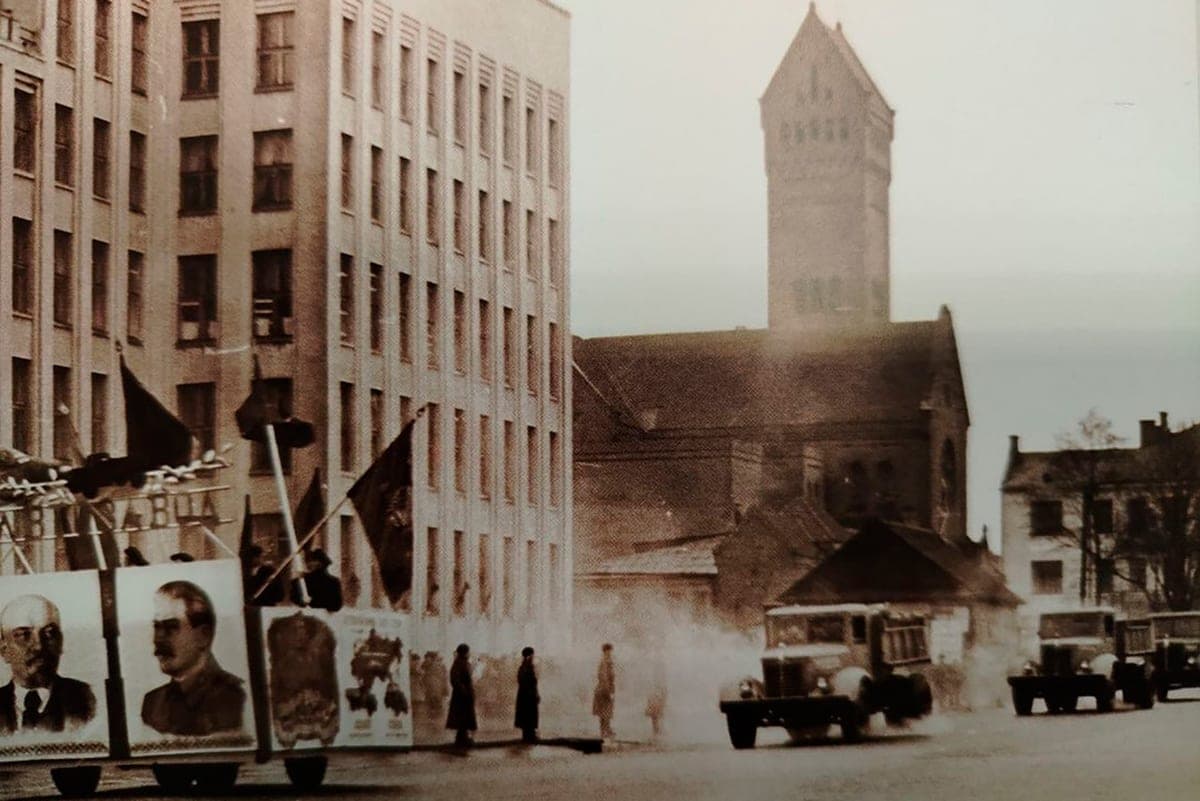
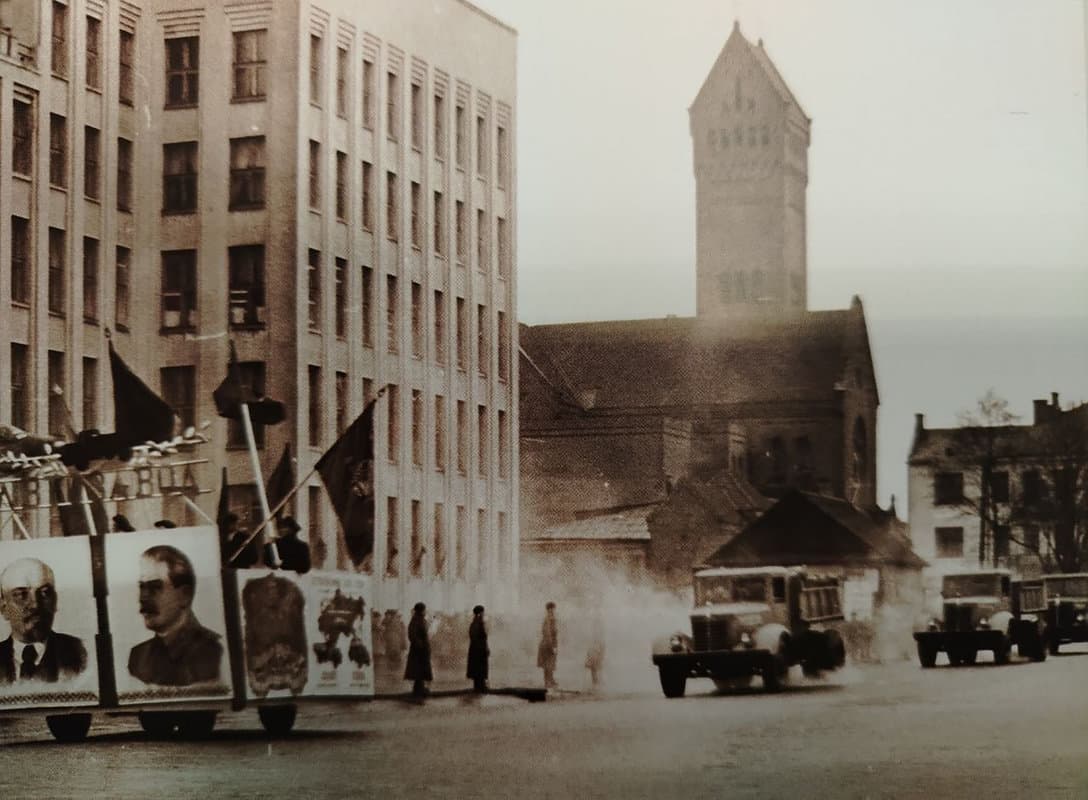
And again, in our old photograph, a place that is recognizable at first sight. Of course, this is Sovetskaya Street, its segment that passes in front of the Red Church and the Government House (by the way, a short segment of the Soviet is on the map of the capital today). Miraculously surviving buildings in the war, policemen froze in the cordon. Grey November sky above the roofs, immediately visible - cold (that day in Minsk was a maximum of +4). Ahead of the festive column are portraits of Lenin and Stalin. And according to the Soviet roaring engines new, no one has yet seen cars with the same new, unusual brand MAZ - Minsk Automobile Plant. In the frame - the first five dump trucks MAZ-205, and it is November 7, 1947, the 30th anniversary of the October Revolution.
Interestingly, the origin of the first MAZ were... Yaroslavl. The fact is that the Minsk Automobile Plant began as an automobile assembly enterprise, where American Studebakers, Dodges and Mackeys were assembled from imported sets (in total, about 17 thousand made them in 1944-1946). And in January 1947, the first domestic cars arrived in Minsk from Yaroslavl, the production of which was to be mastered from scratch, in a full cycle. These were assembled in November 1946 diesel YaAZ-205, dump truck version of the YaAZ-200. Why the first model for Minsk was a dump truck, and not an on-board machine, is quite understandable: in the conditions of post-war devastation, dump trucks were much more necessary. New YaZ liked everyone: the car was modern, lifting, powerful. However, then drivers confused unusual diesel engines - they were very sensitive to cold, capricious, required good lubrication and bench service. And they just roared incredibly, much stronger than the current engines, and the exhaust was much dirtier. But then it was ignored.
By this time, a large Yaroslavl “landing” of specialists had already firmly settled in Minsk, who arrived from YaAZ to build a new car factory. It was headed by Georgy Mikhailovich Kokin, appointed chief designer of MAZ. By that time, Kokin had already managed to inscribe his name in the history of the Soviet automotive industry - he was the author of the first Soviet three-axle bus YaA-2, the first dump truck YAS-1, the first trolleybus YATB-1 and tracked artillery tractor I-12. As you can easily understand from the abbreviations, they were all issued in Yaroslavl. Now Kokin and his team had to create the Minsk Automobile Plant
By the beginning of 1946 in his department there were ten people working in a single room, in the middle of which hissed red-hot stove-bourgeois. At first, Kokin’s Moscow superiors believed that MAZ designers should be subordinated to Yaroslavl: why create their own department if the plants will produce the same cars? But Kokin Mountain stood up for the independence of MAZ: what kind of plant is it if it does not have its own designers? Point in the dispute put then P. K. Ponomarenko: depend on Yaroslavl Minsk should not! MAZ-205 is one of the symbols of the post-war restoration of the entire USSR. The roar of diesel engines could be heard everywhere, from Lithuania to the Far East. And soon the high quality of Belarusian dump trucks was appreciated abroad. The first export MAZ in 1950 left to rebuild the destroyed Warsaw.
In dozens of photos - MAZ-205 surrounded by smiling drivers of Indonesia, Egypt, Vietnam, Mali, Nicaragua, Cuba. In the design of the YaAZ-205 in Minsk made several small, but notable refinements. On the hoods of all Yaroslavl cars put a nickel-plated figure of a bear depicted on the coat of arms of Yaroslavl. Kokin also believed that Belarus needs its own symbol: bears, of course, are in the Belarusian forests, but the universally recognized symbol of the republic is the bison, let it be an emblem. And since it is too expensive to put a bison figure on the hood of each MAZ, he proposed placing a nickeled silhouette of the forest dweller on the sidewalls of the hood. The cost was about half as cheap. So it happened, although on the exhibition and anniversary copies of MAZ small bison still put on the hood. In August 1947, there was even a project to assign MAZ-205 to the name of its own "Zubr". But then this idea was abandoned, again for reasons of economy: if you place a metal plate with the inscription “Zubr” on each dump truck, how much will this result?
In addition, in Minsk, the appearance of the machine has changed significantly: in YaAZ grille was with short horizontal louvres (slits), and MAZ decided to put grilles with long vertical. The solution is again more rational: through such slots, the engine cools better. And it immediately becomes clear: here comes Yaroslavl, but a Minsk citizen. Over time, other improvements appeared, imperceptible to the eye: two driveshafts were replaced by one, rubber glass seals appeared in the cabin, and the power of a 110-horsepower diesel engine in 1958 rose to 120 horsepower.
In Yaroslavl and Minsk, the machines were being prepared in parallel. And they were presented to the public at the same time: on November 7, 1947, in Yaroslavl, on-board trucks YaAZ-200 first passed in a festive column, and in Minsk - their "brothers" assembled in the experimental workshop of the MAZ-205 dump truck. This is the moment captured in the picture.
Of course, all the factory workers were present on that solemn day at Lenin Square in front of the Government House. Belarus is still in ruins, the tears of widows have not yet dried up and the guerrilla dugouts have not overgrown with grass. And there is no one present at the celebratory demonstration who did not fight in 1941-1945. And a new dump truck is already going through Minsk, the very first Belarusian car made in our republic from our domestic materials! The production of the dump truck lasted until 1966, and almost all large objects of the late 1940s - early 1960s were erected with their participation. And after the MAZ-205 stopped going off the assembly line, they worked very actively: for example, during the construction of the monument “Motherland” in Volgograd, concrete parts of the giant sculpture were transported by them.
It is interesting to compare how the fate of the YaAZ-200 / MAZ-205 family developed at the two plants. In Yaroslavl, such machines managed to do very little: only 1,745 on-board YaAZ-200, 121 dump trucks YaAZ-205 and 54 trucks YaAZ-200V, after which the plant was reoriented to the production of heavy three-axle trucks (in 1959, their production was transferred to the Ukrainian Kremenchug, where the KrAZ plant appeared). But in Minsk, the “two hundredths” went into a series of thousands. The MAZ-200 on-board truck was mastered in 1951, and then the all-wheel drive army MAZ-502, the MAZ-501 timber truck, the MAZ-200V tractor and dozens of special vehicles on their basis appeared - petrol and oil tankers, fire tanks and even milk trucks. Only one dump truck MAZ-205 was released a very solid "circulation" - 98 721 (and this model, by the way, in May 1959, was destined to become a 100-thousandth MAZ). And all the cars of his family made about 230 thousand. In the city stream, of course, they will not see, but running copies of such MAZ are, and many. As a rule, the owners take care of them: they understand that the car is legendary!
And the main “father” of MAZ-205, Yaroslavl Georgy Kokin, tied the fate with Belarus forever. In 1949, for the creation of a family of heavy diesel trucks, he was awarded the Stalin Prize III degree. Five years later, Kokin headed the department of “cars” at the Belarusian Polytechnic Institute. For a long time, in 1963-1973, he was dean of the autotractor faculty of BPI. And he brought up a whole galaxy of bright names that created the Belarusian automotive classics of the 1960s-1980s: M. S. Vysotsky, V. N. Barun, Z. L. Sirotkin, N. A. Sidorov. Kokine students created Belaz, Moaz, KAMAZ. And he brought up in Minsk Georgy Chernyshev returned to Yaroslavl as the chief designer of the local engine plant. Georgy Kokin died in Minsk on November 30, 1984.
The best monument to the legendary designer you can still see at the entrance of the Minsk Automobile Plant on Socialist Street is painted in elegant orange MAZ-205. The most recent, descended from the assembly line on December 31, 1965. It was installed on the pedestal in 1969. In 2022, this unique machine went through restoration (it was engaged in several divisions of the enterprise: an experimental workshop, an assembly shop and a small series workshop), and now looks like a new one.
It all started in November 1947. Cold autumn Minsk, festive demonstration and joyful faces of those who in the shortest possible time created the very first Belarusian car. Not experimental, not small-scale, but truly legendary, won love and respect around the world.


