
Why milk becomes bitter, and is it possible to make cottage cheese out of it, the NAS of Belarus told
How modern production technologies allow you to ensure long shelf life of milk and whether it is possible to make cottage cheese at home.


How modern production technologies allow you to ensure long shelf life of milk, and whether it is possible to make cottage cheese from it at home, read the material of the Minsk-Novosti correspondent.
Bitter taste
- Why does baby milk in small packs not sour, but becomes bitter?
- For the production of baby food, preservatives are prohibited by law, explains Elena Stepanova, Deputy Director for Research at the Institute of Meat and Dairy Industry of the NAS. To ensure the stability of such products, they are made only from raw materials of the highest grade or extra. Milk for children undergoes a multi-stage control. It is tested for the absence of antibiotics, inhibitors, radionuclides and heavy metals, and strictly limit the initial number of bacteria. The final product is manufactured and packaged under aseptic conditions, without contact with the external environment. This preserves the original properties of milk, but it is absolutely sterile and safe. However, after opening the package, foreign microflora inevitably enters it from the air.

According to E. Stepanova, most often these are bacteria that live in the kitchen and in refrigerators. They secrete special enzymes - proteases and lipases. Classical souring of milk occurs under the action of lactic acid bacteria, which process milk sugar (lactose) into lactic acid. But they're not in sterile baby milk. Therefore, it begins the process of breakdown (hydrolysis) of milk protein and fat breakdown. The result is bitter peptides and free fatty acids. They give the spoiled product a pronounced bitter taste.
Live "ultras"
- What is processed ultrapasteurized milk that it is stored for a year, and is it useful for the body?
- Many buyers are frightened when they see milk on supermarket shelves with a shelf life of 6, 9 or even 12 months, which is not in a refrigerated storefront, but on ordinary racks. Some people think it's just chemicals and preservatives. However, the use of any artificial additives in drinking milk is strictly prohibited by technical regulations. Long shelf life is provided exclusively by production technologies. In the process of ultrapasteurization, raw milk in the stream is heated for 2-4 seconds to a temperature of 133-140 ° C, after which it is instantly cooled in a closed system. This brief temperature shock is enough to completely destroy microorganisms. Then the milk without air is poured into an aseptic multilayer packaging. It reliably protects the product from light and oxygen, preventing spoilage processes.
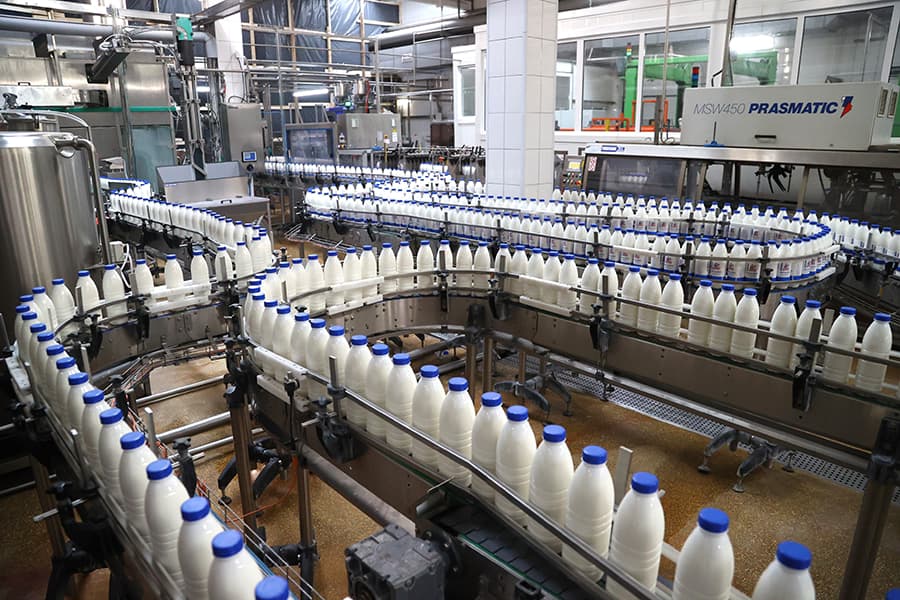
Deputy Director for Research of the Institute of Meat and Dairy Industry of the NAS emphasizes: short-term heating is the most gentle way of conservation. With it, proteins, milk fat, macro- and microelements, including calcium and phosphorus, do not break down, remaining in an easily digestible form. Only unstable vitamins C, B12 and folic acid have minor losses. Therefore, ultrapasteurized milk is a complete and safe source of nutrients.
Homely
- Our mothers and grandmothers in previous years made cottage cheese from ordinary store milk. But today this is not always possible.
- In the Soviet period, milk was supplied to factories from farms and was subjected to minimal pasteurization, Stepanova said. Therefore, part of the “native” microflora was preserved in it. It was worth leaving the bottle warm, as these bacteria were activated, and the milk without problems turned into yogurt, from which cottage cheese was then boiled. And today, for the sake of consumer safety, even ordinary pasteurized milk undergoes high-tech purification of bacteria. There are almost no microorganisms in it. If such milk is simply left on the table, it is likely not to sour, but will begin to mold or bitter because of accidentally caught from the air bacteria.

However, it is possible to prepare a tasty and safe homemade cottage cheese from store milk, according to the interlocutor. To do this, you need to add the necessary microflora. The Institute of Meat and Dairy Industry of the NAS for these purposes has developed a special line of dry home starters. If leaven for cottage cheese is poured into warm pasteurized milk, you can easily get a dense correct clot. It will make a useful home product. The reliability of such starters was confirmed even in the harsh conditions of Antarctica. It is not the first season that Belarusian polar explorers use them for food.
The cat will like it
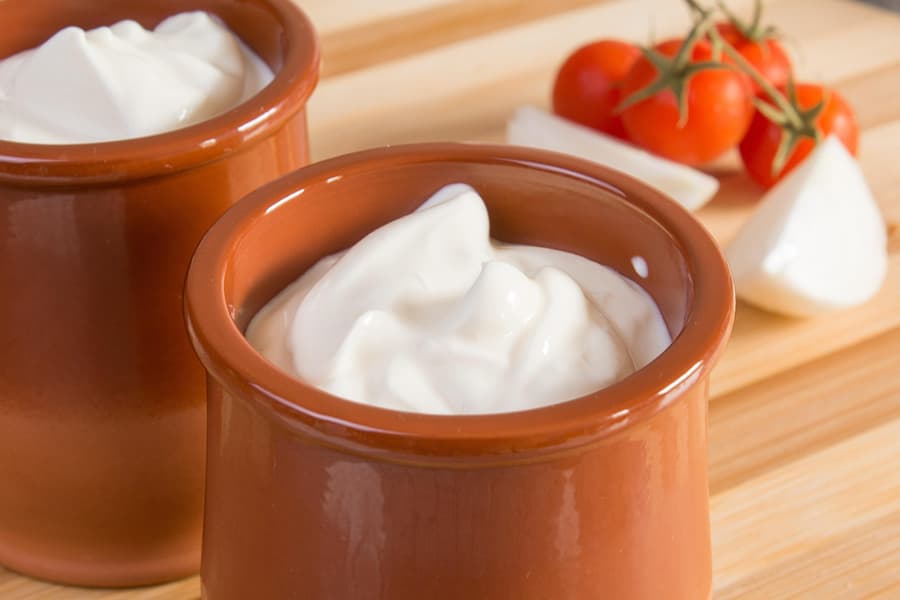
The monthly shelf life of modern sour cream is also the result of improved hygiene of production. Previously, it was packed in factories in open containers (flas, cans) or in cups on equipment, where there was direct contact of the product with air. As a result, mold and yeast spores fell into the finished sour cream from the environment, because of which it soured after 3-5 days.
- Today, production is organized on the principle of a completely closed cycle, where a person does not touch the product at all, Stepanova continues. First, the cream is cleaned and deep pasteurized. Then a pure culture of beneficial lactic acid bacteria is introduced into sterile closed containers (tanks). Next, sour cream is poured into a specially prepared package, cooled and sent to ripening. The most important stage is packing. It happens on automatic lines. There is no contact with the external environment, and bags and cups sealed. It is the ideal purity in production that ensures the long-term freshness of this dairy product.
Photo by Belt and the Internet


