
From October 26 in Chelyabinsk begins to operate a system of paid parking
Deputy head of the city for the development of road transport infrastructure and digitalization Dmitry Ageev on the air of the “Big Edition” of the Granada Press media holding told about why the administration decided to take this step, how the new system will work and what awaits those who will try to circumvent the rules
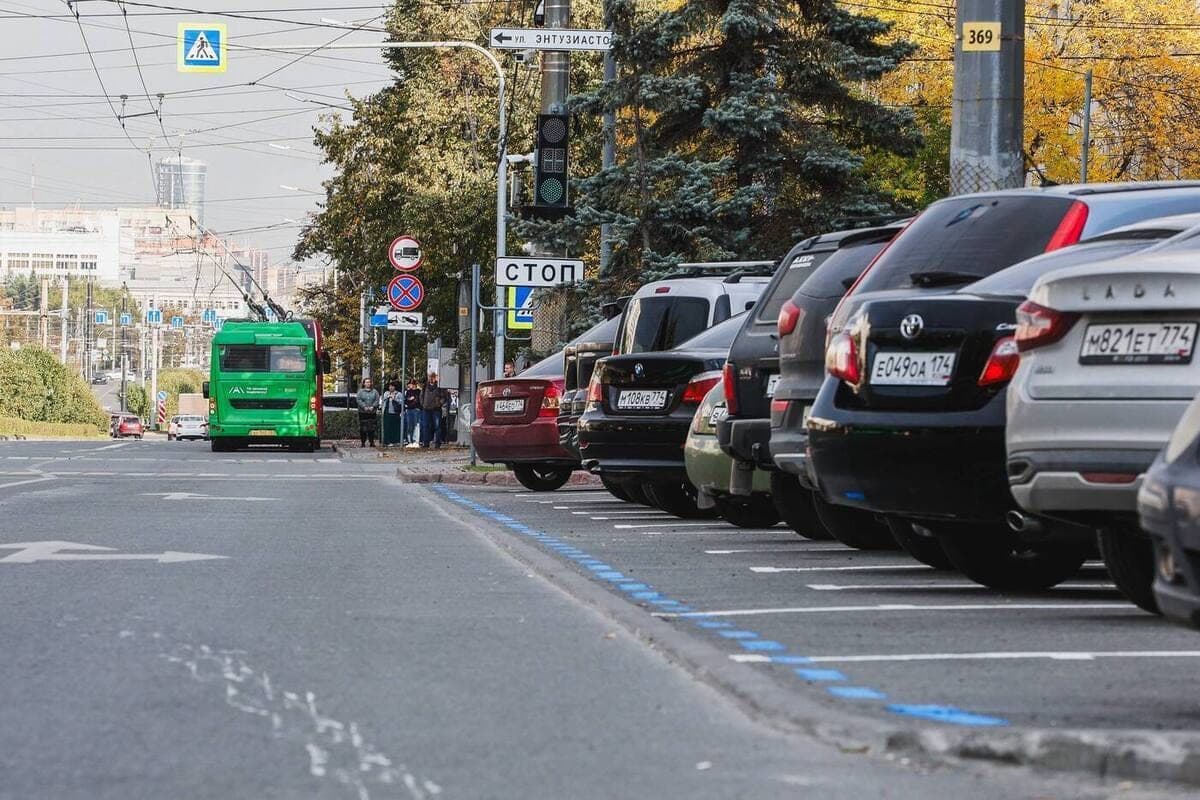
More than 330 thousand cars are registered in Chelyabinsk, which means that the problem of shortage of parking spaces in the city center has reached a critical point. So, the parking at the shopping mall “Ural” and the store “Golden Apple” on Sonya Krivoy street has become a parable: drivers line up in two or three rows, creating constant congestion and emergency situations.
According to Dmitry Ageev, the introduction of paid parking is a continuation of the comprehensive transport reform. After the renewal of the bus fleet, trolleybuses, trams and the start of the construction of the metro tram, the next stage came. The goal is not to make money, but to restore order.
Drivers who spend hours circling the center in search of free space, create additional stress on the roads, provoke accidents due to inattention and pollute the air. The paid system must ensure a constant availability of seats at the level of at least 10% - so that everyone who comes to the center can quickly park and go about their business.
In total, 71 zones for paid parking will be created in the central part of the city.
It will work on Lenin Avenue - on the stretch from Lesoparkova to Engels. Also, paid parking will cover the streets of Vasenko, Elkin, Timiryazev, Vorovsky, Sonya Krivoy, Krasnaya and Pushkin. Organize such places near several significant objects: the Mikhail Glinka Opera and Ballet Theater, the Ural shopping center, Revolution Square, Theater Square and the railway station.
Paid mode will begin to operate on weekdays from 8:00 to 20:00. The first 15 minutes of parking are free. This time is given to drivers in order to navigate, determine the number of the parking area and decide how long they will leave the car.
The city has four paid zones with differentiated rates depending on the load of the site. The basic tariff is 50 rubles per hour. More popular locations will cost 90 rubles per hour. The maximum tariff - 165 rubles per hour - is set only on one, the most congested parking lot near the Ural shopping mall on Sonya Krivoy Street. It is noteworthy that the underground parking of the shopping center takes about 200 rubles, so the municipal alternative looks quite competitive.
Special treatment is provided for the territory near hospitals and social institutions. Here, the first hour of parking is free, and from the second hour, minutely charging at the rate of 50 rubles per hour is included, that is, less than a ruble per minute.
An important detail: you can pay for parking throughout the day until 23:59. This is done specifically for situations where mobile communication is not working, such as during missile or unmanned threats, when operators shut down networks. Postpayment allows you to avoid unreasonable fines due to technical failures.
There are several payment methods. The most convenient is the mobile application, which has been running in test mode since April. You can attach a bank card to it and either replenish your personal account or pay for each session directly. For owners of button phones, payment is provided via SMS in short commands from the mobile balance. Cash can be deposited through bank branches, however, this is the least convenient option.
The application determines the location automatically and prompts the zone number and tariff. However, Dmitry Ageev advises not to rely only on geolocation, and also to check the information on the signs in the parking lot.
Attempts to cheat the system are doomed to failure. Complexes with artificial intelligence fix the car at the entrance to the parking area. The activated alarm does not exempt from payment - the stop does not equal parking, and if the driver is delayed longer than 15 minutes, the system will start charging.
In parallel with the fixation of paid parking, the system will track violations of the rules of placement of transport - parking second row, parking under the sign "Stop prohibited" and other violations. Information about this will be transferred to the traffic police for administrative work.
Penalties for violators will be significant. Individuals will pay 2000 rubles for the first violation and 5000 rubles for repeated. For legal entities, the amounts will be even higher - 5000 and 10 000 rubles, respectively. At the same time, there is an appeal procedure - if the driver can provide payment documents, the fine will be canceled.
The single operator of the system is the municipal institution EVIS, and all funds from paid parking will be directed to the development of road transport infrastructure - updating markings, signs, modernization of intersections.
Preferential categories are divided into federal and municipal. If we talk about federal beneficiaries, disabled people, they do not need to confirm this status. The system will automatically check the presence of their cars in the Federal Register of Disabled Persons through the portal “State Services”. This is the result of a year of interagency collaboration.
Municipal beneficiaries - large families, veterans of hostilities and the Great Patriotic War - must personally apply to the MKU "EVIS". A little over a thousand applications have been submitted so far. Dmitry Ageev urges not to postpone the design at the last moment.
Owners of electric vehicles receive a special benefit - two hours of free accommodation in the zone of charging stations. However, the documents must also be sent to EVIS to confirm that the owner is a resident of Chelyabinsk. Unlike Moscow, where electric cars can be parked free of charge everywhere, the Chelyabinsk approach is more limited, but also noticeable.
A special vehicle with color is recognized by the system automatically. Operative cars of law enforcement agencies without special paint are included in a separate register and are also exempt from payment. All departments provided lists of such machines and pledged to update them in a timely manner.
An interesting point with motorcycles: they are charged at the standard rate for each state number, even if several motorcycles occupy one parking space.
Buses, by contrast, are charged as a single unit of transport, regardless of how many parking spaces they actually occupy. Offices of legal entities are created for car-sharing companies. The taxi issue is still being worked out.
Of particular interest are resident permits for residents of the center. In the future, apartment owners will be able to issue a free parking permit near their home. But the business will not receive resident rights – commercial organizations will pay for parking of official cars through the corporate office of a legal entity.
Understand that you drove into the paid parking area, will help road signs and blue markings. However, as mentioned above, you need to rely on information plates with zone numbers, tariffs and payment methods. Road signs were installed a month ago, the EVIS service carried out sanitary pruning of trees to ensure visibility.
Drivers have already begun to respond to the blue markings and park correctly - in one row, clearly along the lines. Near the same railway clinic, where chaos once reigned, now order.
“Pleasant to see,” said Dmitry Ageev. This means that you can now pass through this street without the risk of getting into an accident. There is no congestion and no chaotic movement of vehicles.”.
The launch of 71 paid parking lots is just the first step. Further expansion will be carried out based on the results of the analysis: where traffic was redistributed, which alternative free places were overloaded, where residents themselves ask to introduce paid zones with resident permits. The administration will also focus on the traffic police regulations for the elimination of foci of accidents and congestion.
The introduction of paid parking in Chelyabinsk is not about collecting money from motorists, the city administration insists. This is about streamlining traffic, reducing accidents and making the center accessible to everyone. The experience of other cities with millions shows that after the launch of the system, the flow of customers to stores does not fall, but grows: people stop driving past in search of a place.
The main thing is to get used to the new reality. Dmitry Ageev is sure: it is better to pay 50 rubles for an hour of comfortable parking than to get a fine.


