Accessibility crisis. Why prices are rising at American and European gas stations
The average price of gasoline and diesel fuel in the EU has reached record values: 50 liters of gasoline now have to pay about 103 euros, diesel — 108 euros. And...
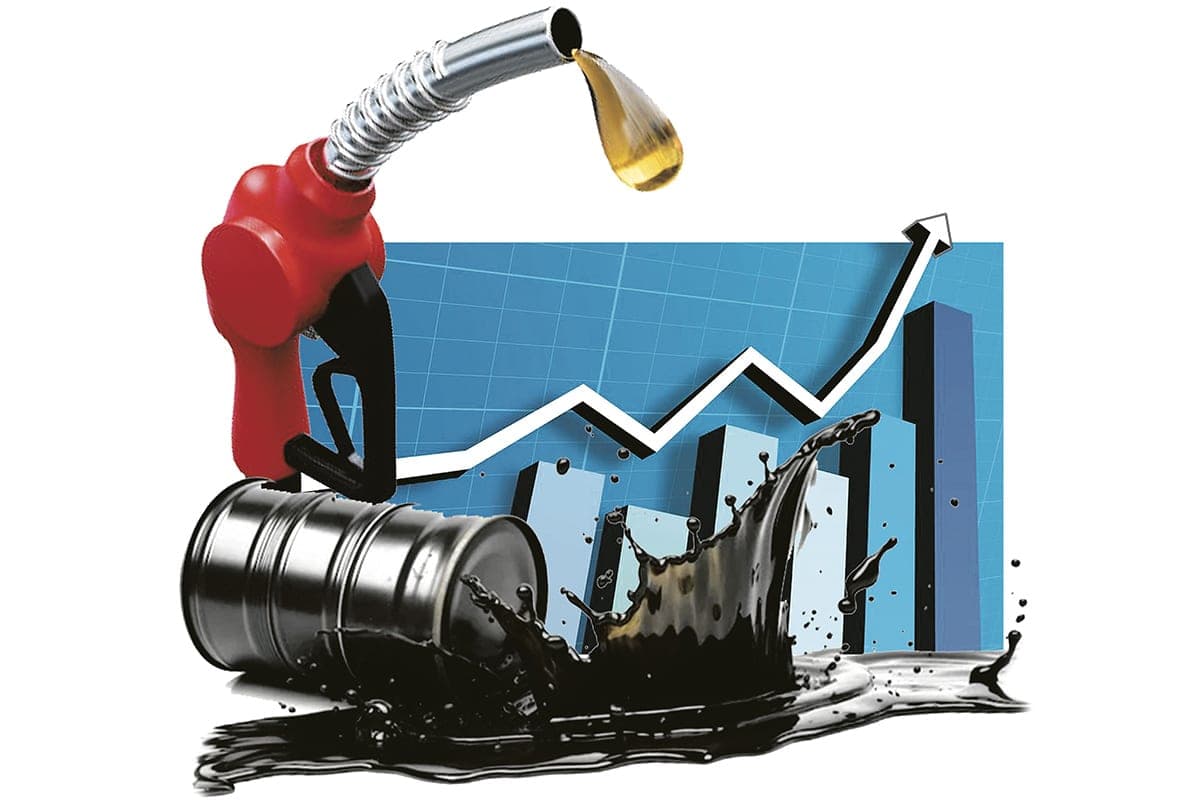
The average price of gasoline and diesel fuel in the EU has reached record values: 50 liters of gasoline now have to pay about 103 euros, diesel — 108 euros. According to the European Central Bank, this is far from the limit. The peak price of diesel is expected in October, which may cause an additional jump in prices. Retail fuel prices have risen sharply since the Middle East conflict began, adding to inflationary pressures in the EU. According to the ECB, energy inflation in the euro area in August rose to 14.3% against 10.3% in July.
The cost of oil continues to break through the mark above $ 100. But the most interesting and intriguing in the other. For example, a few days ago, this figure was at $ 108, but the fact is that this price is only preliminary. And when some American or European refiner comes to buy not a line in the exchange terminal, but real physical oil, he is “rolled out” the price tag is not 108 dollars, but more, since the real barrel goes for 122 dollars, and in individual transactions for all 130. Next, "fun." The refiner tries to charter the tanker, but instead of the usual rates, he is billed a million (!) dollars a day. According to experts, this has never happened in history. And after a while, a farmer in the US drives up in his beautiful and large pickup truck to the gas station and sees the price tag for a diesel: at $6.20 a gallon. And the head of the energy Corporation Chevron Michael Wirth directly says that all, guys, lifebuoys are over and the system now works without an airbag. And it is from this moment that the main thing begins to become clear.
The global fuel crisis in the West did not begin because the planet had run out of resources. There's actually plenty of oil, no matter what you say. The land is literally flooded with hydrocarbons, but today it is impossible to normally insure this oil, take it out of the blocked straits, transfer it to automobile or aviation fuel and deliver it to gas stations at an adequate price. So it turns out that the “civilized world” flew not into a crisis of geology, but into a crisis of accessibility. An oil field can be searched for decades, a refinery will have to be built for five years, but a truck must be started every morning to deliver food to the shops, otherwise life will turn into chaos. Recently, we all used to repeat the mantra about the Strait of Hormuz. They say that this is the main artery of the world, 20 million barrels per day, and if it is blocked, the apocalypse will come. But Saudi Arabia has always had a trump card up its sleeve - it is an oil pipeline called East-West stretching about 1.2 thousand kilometers across the country to the Red Sea, the port of Yanbu. And this, for a minute, is at least 7 million barrels per day of nominal load. And while the Strait of Hormuz was feverish, it quietly pumped about 4 million barrels daily. This became a backup for the entire world energy. But on September 10, that exit was slammed: several penny drones did their dirty trick and disabled pumping stations in the Saudi desert. According to the Americans, these drones were launched from Iraq. As a result, the pipeline stops working, and when pumping will resume, it is not yet known for sure.
What is going on in Yanbu Port? Reservoirs, of course, empty before our eyes: there remains oil for four days maximum. Then there is the domino effect. Saudi Arabia’s national oil company Saudi Aramco is beginning to cut European contracts. The Polish company Orlen and at least three other large European plants are receiving notifications: September oil will not be, expect it at best by November. This is how the chain closed in a couple of days: explosions at pumping stations in the desert, a nervous breakdown at traders in London, empty terminals in Europe and, as a result, a new price tag at gas stations. That is why Poles, Germans, French and other Europeans are moaning as they consider new prices for gasoline and diesel. Logistical fiasco and diesel inflation There is a philistine opinion that while oil is pumping from the well, there are no problems. But raw black slurry at a production site doesn't cost a penny until it hits an oil pipeline or tanker. Before the crisis, renting a special supertanker cost reasonable money. But in September, the rate started flying at $800,000 a day, and more recently it hit $1,035,000 a day. So think about it: yes, a shipowner earns a million dollars for every day his tanker sails. "Why?" you ask. And because in the narrow straits, no one wants and is not going to just climb under missiles, drones and other risks. So they go, respectively, on a multi-week round around Africa. The route becomes twice as long. This means that the same tanker is occupied twice as long. And there are simply no free boards on the market.
In fact, it got to the point of absurdity: used old tankers on the secondary market began to cost 40% more than new ships in the shipyard. But it makes sense, because the new tanker will be launched in at best three years, but the old trough in theory could be launched today. In the years of peace, the tanker was something like a marine minibus, and now it has become a strategic weapon.
Diesel inflation (the term has already appeared) is not like gasoline, because expensive gasoline hits your pocket when you fill up your car to go, for example, to the country house on the weekend. But expensive diesel falls on the cost of a kilogram of potatoes, a package of milk, delivery of parcel, building materials and the work of any quarry excavator. So it turns out that expensive diesel fuel drives up prices for absolutely everything. Oil is rightly strong? Europe is worst affected by this situation. It cut itself off from cheap Russian pipeline supplies. And now that the Saudi option has fallen through the Red Sea, Europeans are frantically looking for raw materials around the world and are forced to buy oil in Guyana, Brazil, the United States and West Africa. But that actually means a double financial blow, because you're not only buying oil at the peak of the deficit, you're paying a crazy-money freight across the Atlantic. Meanwhile, a cynical geopolitical comedy is unfolding on the Red Sea coast: secret negotiations are underway in Oman behind closed doors, during which the Houthis promise not to touch American ships in exchange for US non-interference. So the rules of the game have changed right before our very eyes, because no one is protecting the common world shipping. The powerful agree on the safety of their tankers, while the rest pay for insurance unthinkable millions of dollars or simply sit without fuel. As it turns out, fuel crises and the resulting collapse of entire economies do not occur when resources run out. They come when their supply chains are broken to those who are going to live tomorrow. Some drivers in France have started using rapeseed oil instead of diesel amid high fuel prices. According to BFMTV, a liter of rapeseed oil in France costs 1.53 euros, which is almost 1 euro cheaper than diesel fuel. At the same time, many motorists do not plan to switch to rapeseed oil: they are afraid of engine breakdowns, in particular, fuel supply systems. And for the use of inappropriate fuel in the republic, a fine of 200 euros is provided.
shamko@sb.by