Reverse to ом73 or rise to ом86: what will happen to the dollar in November
The ruble began to strengthen again in the second half of October, the dollar fell below 81. Will this trend continue in November and what factors will affect the exchange rate - read the material "RBC Investments"
The strengthening of the ruble, which began in the second half of September, continued in October. On October 7, the official dollar rate rose to a local peak just above а85.7. Then the ruble began to recover. On October 24-26, the Central Bank for the first time in 2.5 months set the dollar rate below 81 - at the level of .80.54. The official rate of the euro fell to 90.24, the yuan - 12.06.
According to Mikhail Seltzer, an expert on the stock market of BCS World of Investments, November is traditionally one of the two most dangerous months of the year for the ruble. According to him, in 70% of cases, the national currency has become cheaper this month.
The most dangerous month for the ruble is August, this year he justified it.
“RBC Investments” asked the experts what main factors will affect the ruble in November 2026, as well as what dollar rate they expect.
What factors will affect the ruble exchange rate in November
1. Geopolitical background
According to Alexander Bakhtin, investment strategist of Garda Capital, an important factor for the ruble and all ruble assets is the external background. In October, it began to improve, which supported the national currency.
On October 21, Russian President Vladimir Putin met with special envoy of the US President Steve Whitkoff in St. Petersburg.
Earlier, in mid-October, US President Donald Trump ordered not to apply a number of sanctions, restrictions and duties under the law on sanctions against Russia and Iran. Among these measures are additional duties of 500% on Russian goods and 100% on goods of countries in the top five buyers of Russian oil and gas, as well as countries most actively promoting the circumvention of oil sanctions.
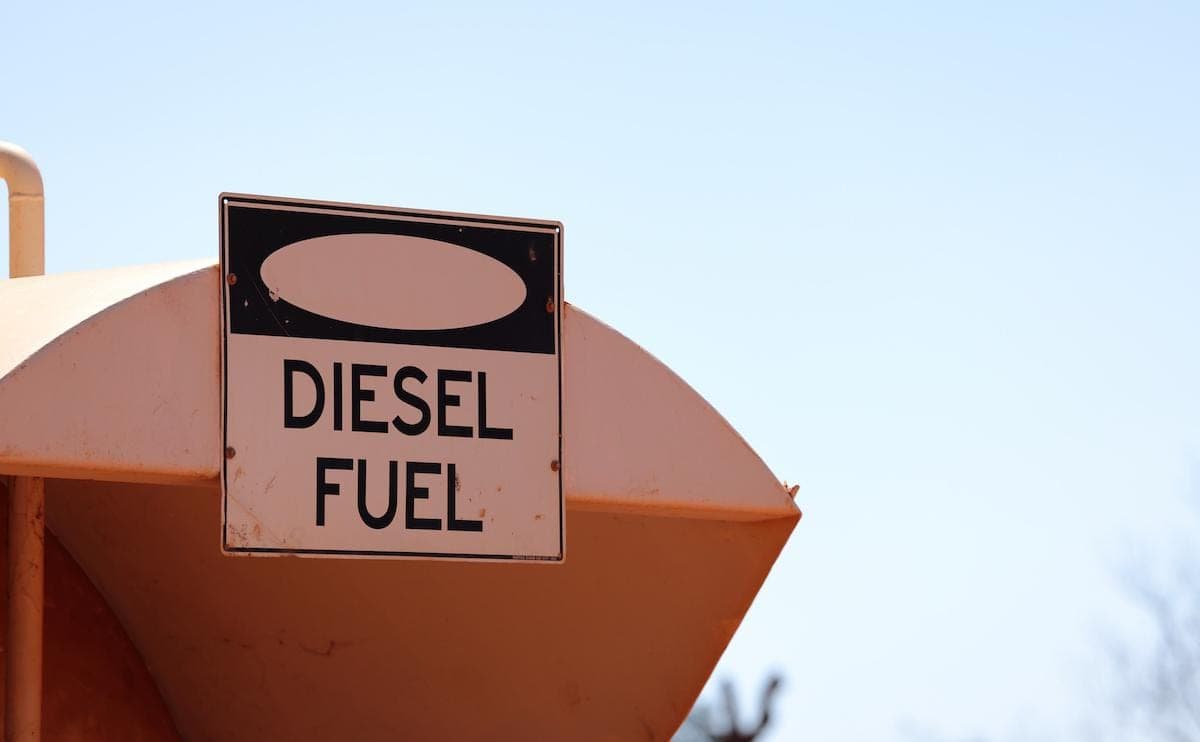
In October, Trump also announced an agreement with Russian President Vladimir Putin to supply Russian diesel fuel to American and world markets. The US Treasury withdrew from sanctions the supply of Russian diesel until April 2027.
The market does not rule out further diplomatic progress in November. On November 18-19, the leaders of Russia, the United States and China may meet on the sidelines of the summit of the Asia-Pacific Economic Cooperation (APEC), and against the background of this event, market volatility may increase.
According to Bakhtin, the improvement in investor sentiment reduces demand for currency and increases interest in buying ruble securities, while the aggravation of the geopolitical situation, on the contrary, forces them to partially avoid risks in the currency. In general, the factor of geopolitics is the least predictable and irrational, there can be both “black swans” and white.
Mikhail Vasiliev, chief analyst at Sovcombank, notes that the diesel deal between Russia and the United States, in his opinion, increases export opportunities and improves the mood of market participants, as there are hopes for improving relations between Russia and the United States and concluding new deals. The expert believes that in case of progress in bilateral negotiations between Russia and the United States or in negotiations on the Ukrainian conflict, the ruble may receive an additional small impetus to strengthen.
But geopolitics can also become a factor in the weakening of the ruble in the event that there is a pause in the diplomatic settlement of the conflict in Ukraine, Natalia Vashchelyuk, senior analyst of the Criminal Code “First”, draws attention to.
At the same time, as noted by Mikhail Vasiliev, the strengthening of the ruble can restrain the remaining geopolitical and sanctions risks that complicate foreign trade calculations and export logistics. In particular, Europe continues to work out new packages of sanctions.
Vasiliev adds that the dynamics of the ruble in November will depend on the development of the conflict in the Middle East: the more acute the conflict, the higher the price of raw materials and the stronger the ruble.
2. Central Bank rate
As another basic condition for the stability of the ruble in November, Bakhtin calls the preservation of tight monetary conditions. The key rate, in his opinion, will not change in December, which will support the ruble.
At the October meeting, the Central Bank kept the key rate at 14%. The regulator made the decision not to change the rate for the second time since April 2025: the rate did not change in September. For more than a year, the Central Bank has consistently eased monetary conditions.
According to Bakhtin, the attractiveness of ruble savings will remain relatively high, and lending, including for imports, will be restrained.
Meanwhile, Finama analyst Nikolai Dudchenko warns that another round of escalation of the conflict with Iran could become an additional pro-inflationary factor and reduce the space for the Bank of Russia to maneuver further. It is likely that the regulator will be forced to keep the key rate at a high level.
3. Exports
The key factor in supporting the ruble is the balance of exports and imports, in which export revenues enter the market with a time lag of one to two months, Alexander Bakhtin notes. Therefore, in November in the course will be broadcast quotes of oil in early-mid-autumn. In September, Brent rose in price, reaching three-digit levels.
Vasiliev adds that in October, the average tax price of Russian Urals oil is around $105 per barrel after $92 in September, $67 in August, $59 in July and $64 in June. However, disruptions in shipments of oil through the Black Sea ports can limit the flow of foreign exchange earnings and restrain the strengthening of the ruble, he adds.
Yuri Kravchenko, Head of the Bank and Money Market Analysis Department at Veles Capital, also believes that the timing of receipt and sale of export revenues can be influenced by sanctions and infrastructure restrictions, temporarily reducing the supply of currency.
According to his forecast, the spot price of Brent oil in November will be in a wide range of $110-140 per barrel, the price of Urals is $86-116 per barrel. The analyst believes that exporters in November will continue to sell almost all foreign exchange earnings due to sanctions and a high key rate.
4. import
Pressure on the ruble may have the recovery of demand for currency from importers, believes Yuri Kravchenko. According to Vasiliev, increased demand for foreign currency to pay for imports includes unscheduled purchases of fuel and equipment to protect and repair infrastructure.
According to Bakhtin, imports may still grow, since the high season of pre-New Year sales is ahead. This factor, as a rule, puts pressure on the ruble at the end of the year.
5. Capital flight
As another important factor for the ruble, Vasiliev calls the dynamics of capital flows, depending on geopolitics and the key rate.
6. Currency operations of the Central Bank and the Ministry of Finance
As noted by Yuri Kravchenko, increased purchases of currency under the budget rule put pressure on the ruble, as they increase the demand for foreign currency in the domestic market.
In the period from October 7 to November 6, the Ministry of Finance will buy currency and gold under the budget rule for a total of у 279.42 billion. The daily volume of purchases will thus amount to Е12.7 billion. For comparison: from September 7 to October 6, the Ministry of Finance under the budget rule bought currency for у2.5 billion per day. That is, daily purchases have increased fivefold.
In addition, the Central Bank simultaneously daily until the end of the year sells currency for у0.58 billion. Thus, net purchases by the monetary authorities will amount to 12.12 billion a day against 1.92 billion a month earlier (an increase of 6.3 times).
According to Vasiliev, from November 7, the volume of purchases will increase to ки17-19 billion per day, which will reflect an increase in export revenues. The budget rule compensates for two-thirds of the impact of changes in the price of oil on the ruble, he adds. At high oil prices, the Ministry of Finance buys excess currency in the NWF.
Vashchelyuk also believes that the Ministry of Finance will continue to buy foreign currency under the budget rule, absorbing part of the inflow of foreign exchange earnings. This will deter the strengthening of the ruble.
In 2027, the budget rule will be tightened by reducing the base price of Russian oil from $59 to $50 per barrel, which means an increase in foreign currency purchases under the budget rule, all other things being equal. Knowing about the upcoming changes, market participants can increase demand for the currency and reduce its supply now in anticipation of the weakening of the ruble in 2027, Vashchelyuk said.
What will happen to the dollar in November 2026: forecasts of experts
Natalia Pyreva, Head of Analytical Department at Digital Broker, said: “We believe that a moderate balance will remain in the foreign exchange market in the end, so we expect consolidation in the range of 83–86 per dollar with possible attempts to gain a foothold above the upper limit of the range.” Mikhail Vasiliev, chief analyst at Sovcombank: In the baseline scenario (while maintaining the status quo in the Ukrainian and Middle East conflicts), we expect the ruble to remain strong in November and continue to trade in the established ranges of 80–86 per dollar, 11.9–12.9 per yuan, 90–97 per euro. In case of further aggravation in the Middle East and the growth of Urals oil in the region of $110 per barrel, the ruble may move to the range of 73-79 per dollar, 10.9-11.8 per yuan, 82-89 per euro. Nikolai Dudchenko, analyst at Finama: In our baseline scenario for the fourth quarter, we predicted that the USD exchange rate until the end of the year would be in the range of 82–87. Meanwhile, we believe that now we need to be ready for the possibility of a dollar depreciation to 80-81, which does not look like an unrealistic scenario with high commodity prices remaining. Natalia Vashchelyuk, Senior Analyst at the First Management Company: In the baseline scenario, the dollar exchange rate in November may remain in the range of 80–85 with lower oil prices. If oil prices remain high (around $100 or higher), the dollar could move into the 75-80 range. Yuri Kravchenko, Head of Bank and Money Market Analysis at Veles Capital: In the baseline scenario, we expect the dollar exchange rate in November in the range of 83–85. This level corresponds to the current balance of main factors: foreign trade conditions and favorable interest differential support the supply of currency and the attractiveness of ruble assets, while currency purchases under the budget rule, import demand and sanctions risks work in the opposite direction. We attribute a significant deviation from this range primarily to a change in the geopolitical risk premium.” Alexander Bakhtin, investment strategist at Garda Capital, said: The ruble has a chance to hold a stable November and even strengthen to .80 per dollar, especially if geopolitics continues to improve. The upper limits of exchange rate fluctuations are seen in the area of х84.” Mikhail Seltzer, stock market expert at BCS World of Investments: “According to a combination of factors, after the October correction of foreign exchange rates, a rebound of pairs is likely in November, and the benchmarks may be: the dollar is closer to ому85, the euro is again 95, the yuan is higher than 12.5.”.
Read "RBC Investments" in "Max".