How do simulators for sensory integration, which appeared in the CCROIR Minsk
Simulator complexes of sensory integration of domestic production appeared in the centers of correctional and developmental training and rehabilitation of Minsk.
Simulator complexes of sensory integration of domestic production appeared in the centers of correctional and developmental training and rehabilitation of Minsk, the correspondent of the Minsk-Novosti agency reports.
About 35,000 children with special educational needs live in Minsk.
- Our children are different, and the state creates conditions for each of them, taking into account individual characteristics, to receive the necessary pedagogical assistance and development, the Minsk City Executive Committee noted.
The number of integrated classes and groups for children with OPFR is growing, the material and technical base of educational institutions that provide specialized support to this category of children is being improved.
Since August, new unique equipment of domestic production – sensory integration simulators – has been installed in the centers of correctional and developmental training and rehabilitation of Minsk. About 600 thousand rubles were allocated for their purchase. They are necessary for training with children with developmental disabilities and, above all, improve the ability of the brain to properly process signals coming from the senses. Useful simulator for children with autism spectrum disorders, attention deficit and hyperactivity disorder, intellectual disability, disorders of the musculoskeletal system.
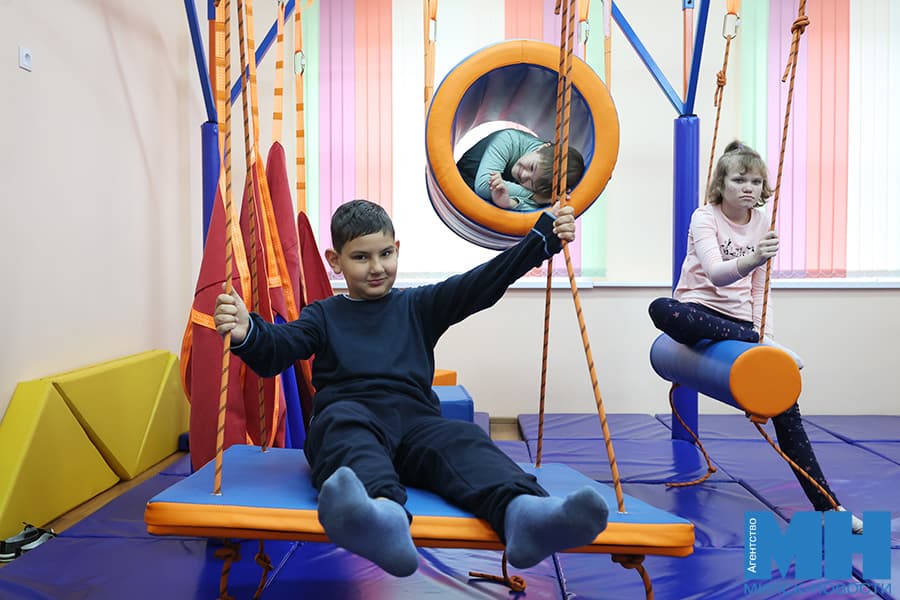
With the complex, you can conduct classes in a playful form: special exercises stimulate the vestibular apparatus, tactile sensations, develop coordination of movement, dexterity and attention. The simulator is mobile and multifunctional. It is a large design on which you can attach various soft modules - suspended barrels, logs, platforms, trampolines. The purpose of the class at the complex is to help children correctly read the signals of their own body.
"We've been waiting for the complex."
Centers for correctional and developmental training and rehabilitation are institutions of special education. They are located in every district. Children with special educational needs get the help they need. We work with children with ASD, with severe and multiple disabilities in physical and mental development. We also provide correctional and pedagogical support to children who attend ordinary kindergartens and schools, but need classes with a psychologist and speech therapist, said Inna Tarasenko, Deputy Director of the Oktyabrsky District Central Research Center.
Visit the center with parents and children from 0 to 3 years.
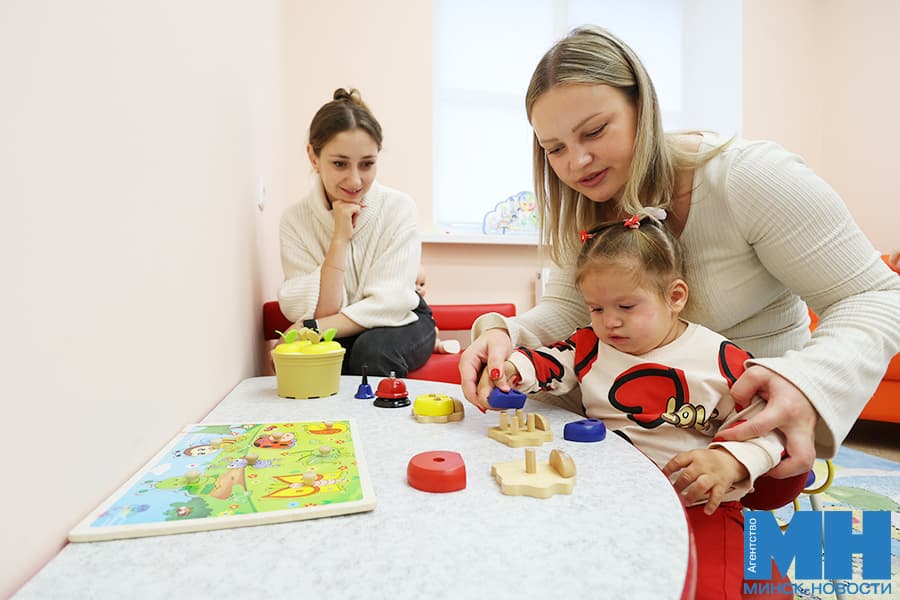
- These are guys with OPFR or developmental risk. They have not yet started school or kindergarten. We provide them with early comprehensive assistance, Tarasenko noted.
A team of specialists works with the youngest wards: a teacher-defectologist, a teacher-psychologist, a musical director. There's a child neurologist in the state, a massage nurse.
In the office of early comprehensive care is just the educational process. On an individual lesson with a teacher-defectologist came with mother Leonella little Eva. The girl is just over two years old. According to her mother, she has a delay in motor and musculoskeletal development against the background of past diseases.
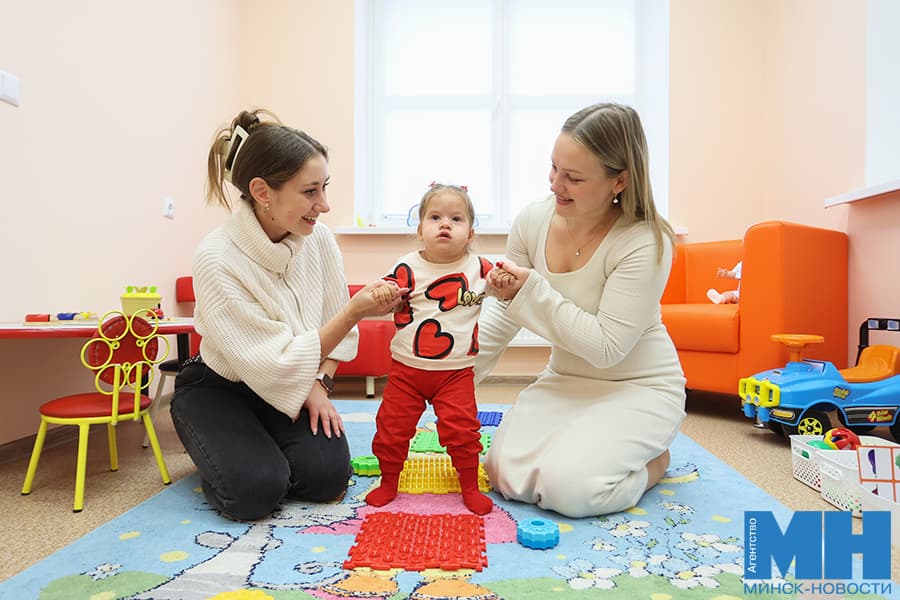
- We had questions about the heart, a year underwent surgery, said the woman.
But Eve begins to walk, and she does it very actively. She is curious, and although her vocabulary is not yet formed, vivid exclamations and laughter indicate that she likes classes in the center.
- We plan to first rehabilitate, stand on legs, start walking confidently, and then think about the kindergarten, said Leonella’s mother.
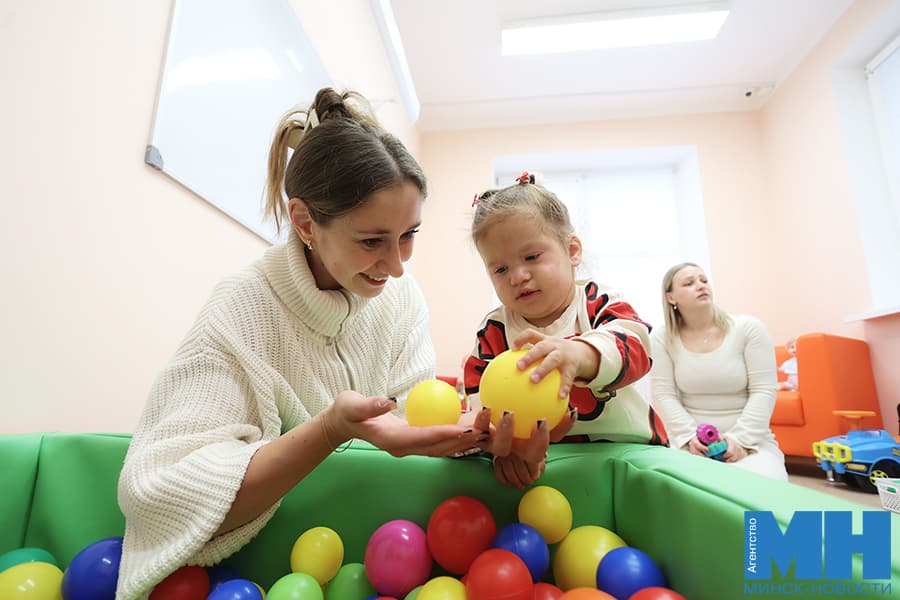
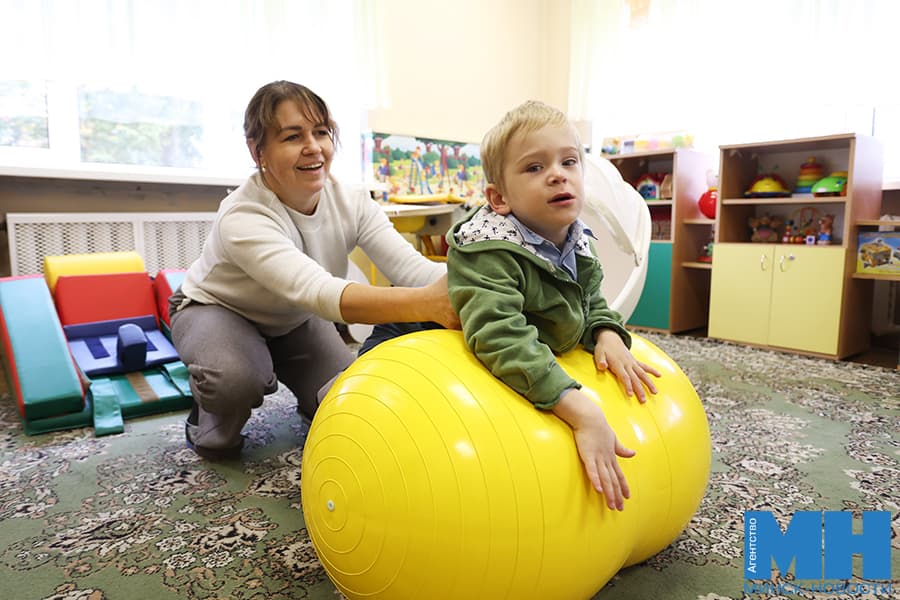
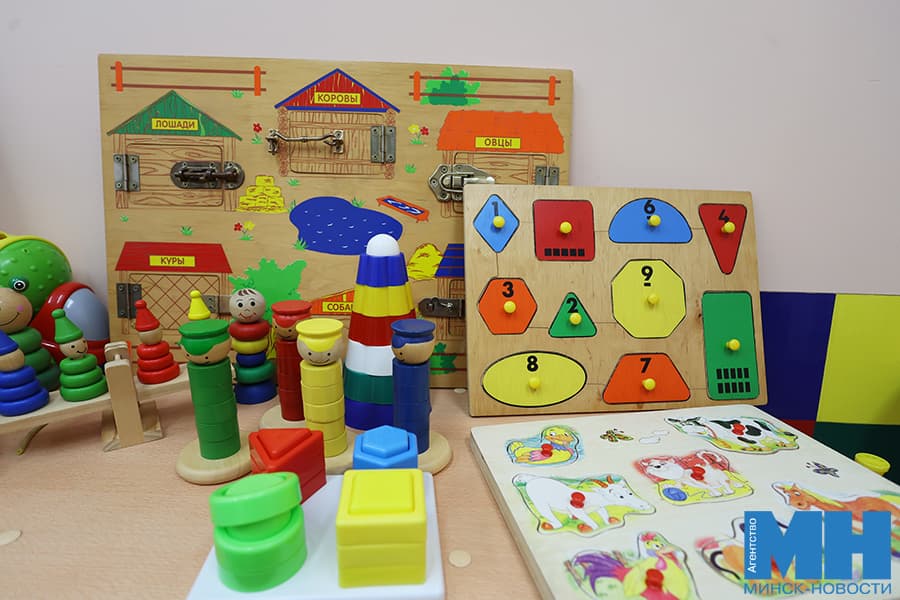
- We have a bright beautiful room, in which there are many toys and special equipment - everything is aimed at sensory perception, the development of general and fine motor skills. Developing language skills. The condition of children during the year of classes gives a very good dynamics, explained the teacher-defectologist Veronika Poloz.
Preschool groups and classes were also created on the basis of the center. The first half of the day - classes and lessons, the second - activities with the teacher. There is a hot meal in the center. Everything is like in a normal school or kindergarten, the only difference is that children are trained in special educational programs.
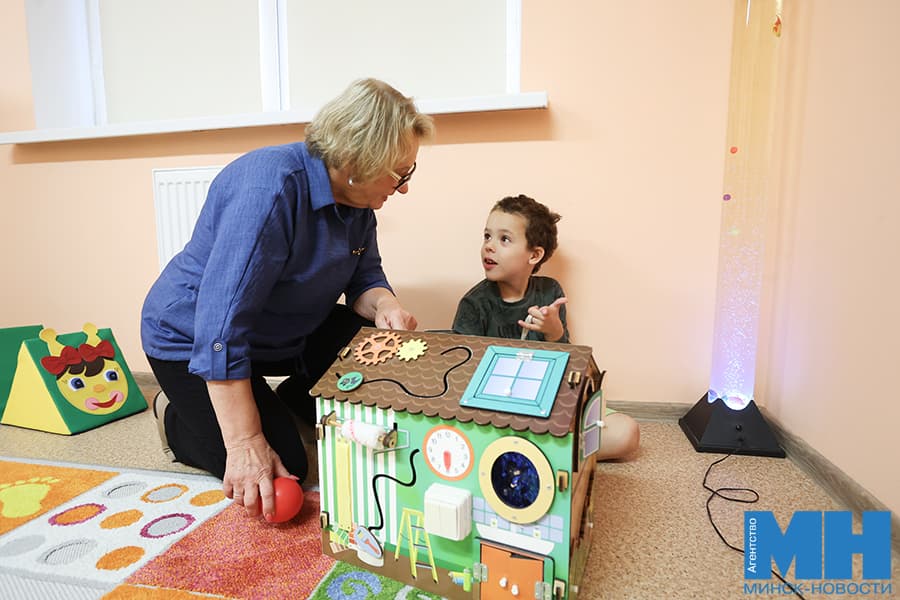
CCRROIR October district is visited by more than a hundred children. It is equipped with a touch room, an art therapy room, recreation, interactive panels. And since the end of summer, teachers have been using a new sensory integration simulator to work with wards.
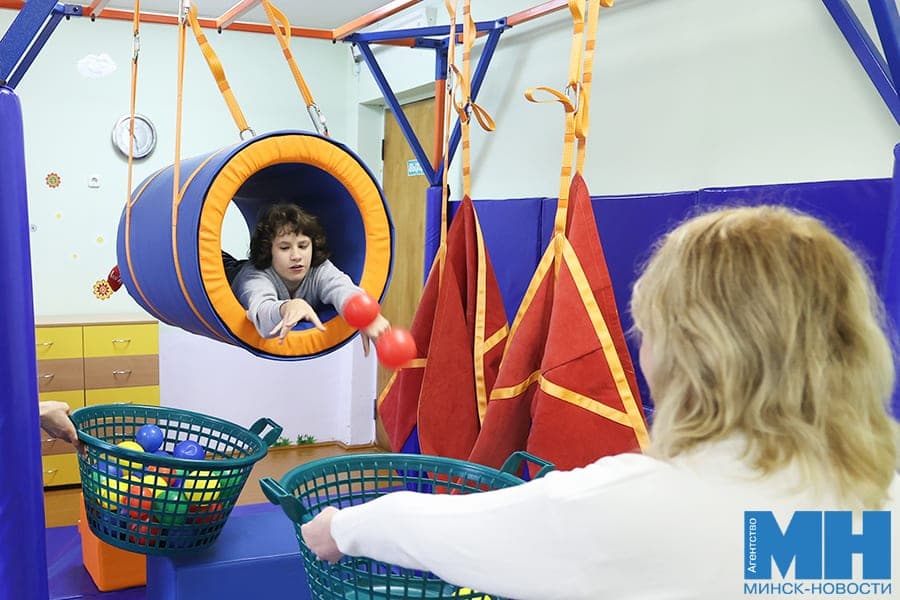
- We've been waiting for him. Suspension modules on the simulator can be in motion or static. And each time the guys get a different sensory load. In addition, during the lesson, thinking and memory are formed. The guys are offered a certain program, for example, crawl through the tunnel, take the ball and bring it to the basket. Children memorize the algorithm and perform it, said psychologist Irina Koran.
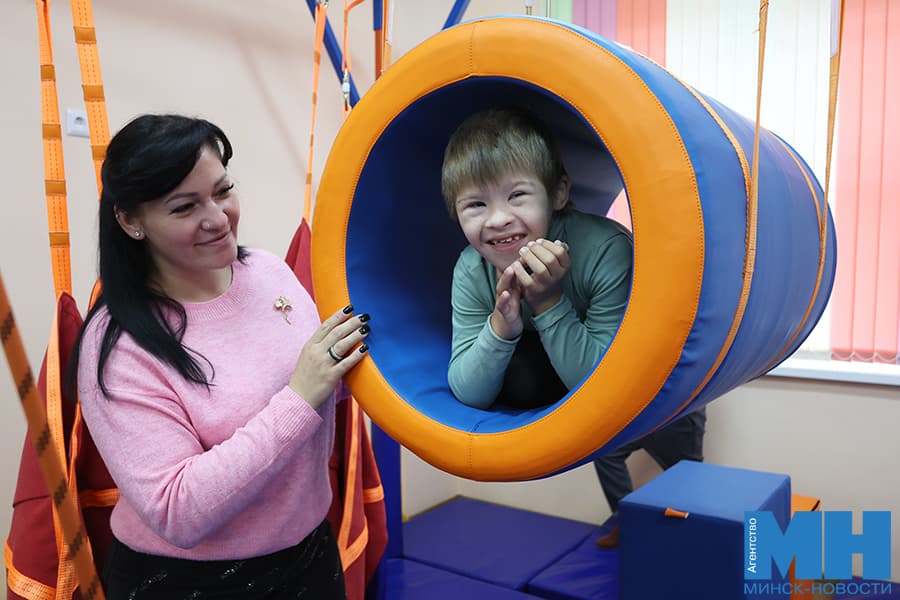
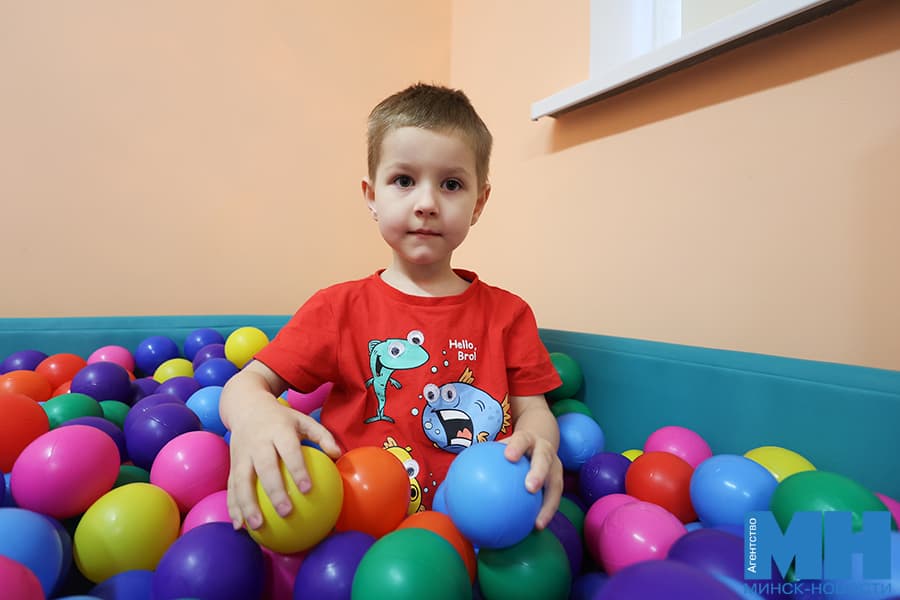
Before our eyes, students of the 1st grade are engaged in new equipment. Everyone has their own characteristics. At the same time, they behave like ordinary schoolchildren: they have fun, they play, they happily perform exercises. One of them is Sasha. The boy diligently did exercises with balls, and now settled in a suspended soft tunnel.
- The class usually lasts 30 minutes. Children get a charge of cheerfulness and positive. They will be saturated with sensory and can continue training according to their schedule, Koran noted.
“Everything is working here to rehabilitate children.”
A unique simulator for sensory integration came to the Central Committee of the Russian Federation No. 2 of the Frunze district. For teachers, this is a great help in the work. Director of the center Irina Kuznetsova conducts a short tour. Young wards have the opportunity to work with specialists in well-equipped rooms.
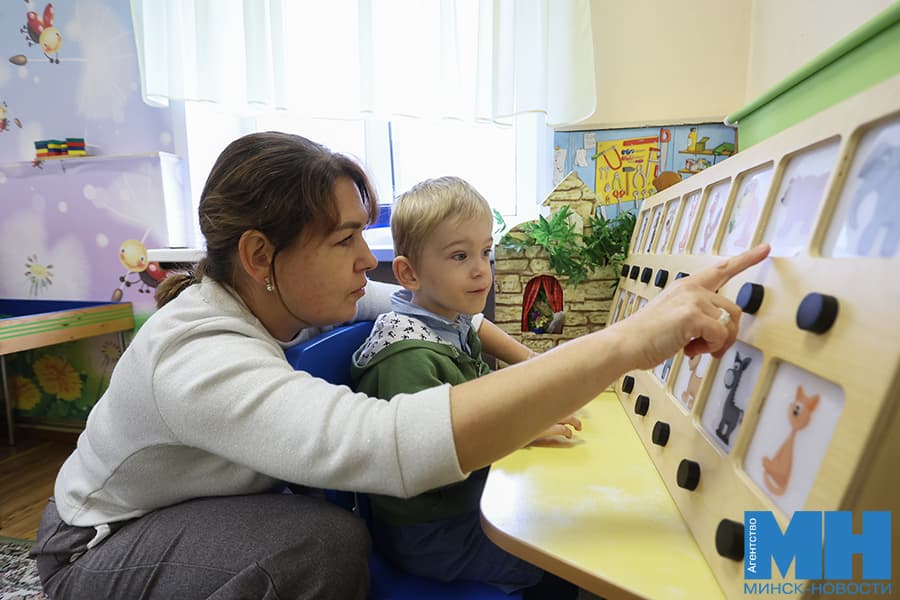
- We have a lot of interactive devices with didactic games. Our feature is the use of real musical instruments when working with children: bells, maracas, drums, cabanas, castanets, shakers, synthesizer, I. Kuznetsova listed.
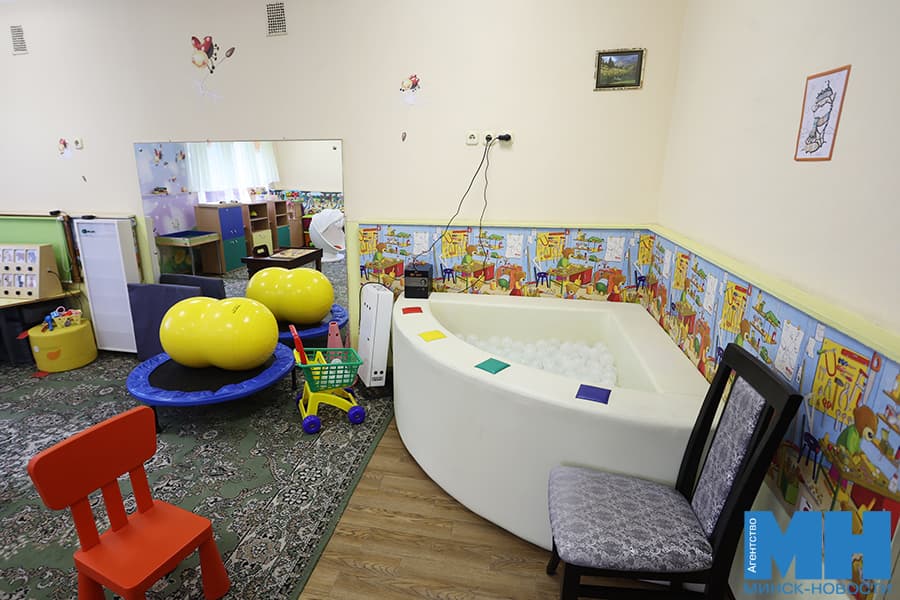
From the original - vibrating musical dry pool with balls. The child sits in it, soft lighting is turned on, music plays, while the young “swimmer” feels its vibration inside the pool. Various mobile simulators and bright specialized equipment, interactive panels - it seems as if every square meter in the offices is filled with toys. But this is not just a space for games - everything here works for the rehabilitation of children.
In working with children, teachers use a new sensory integration simulator. Our model is sixth grader Christina. Now, with the support of teachers and instructors, she restores tactile sensitivity, body sensation in space, visual-motor coordination.
Christina - in a smoothly swinging suspension tunnel. Her task - according to the instructions of an adult to take "in flight" toy and also, while in motion, aptly throw it into the basket. The complex allows children to learn to feel their body.
- With such equipment, an instructor-methodist for adaptive physical culture, a teacher-defectologist, a teacher-psychologist can work. The main thing is that adults are next to the child, and, as a rule, this is not one person, but a team of 2-3 specialists. This allows you to competently conduct an individual lesson, explained I. Kuznetsova. Our teachers have the necessary knowledge, including in anatomy, neuropathology and others, not only to accompany children, but also to develop their own methods of working with such equipment. There is always an opportunity to hold a lesson with a child interesting and dynamically as possible. Children simultaneously receive motor and mental load. And we are very grateful to the state that we received such a complex.
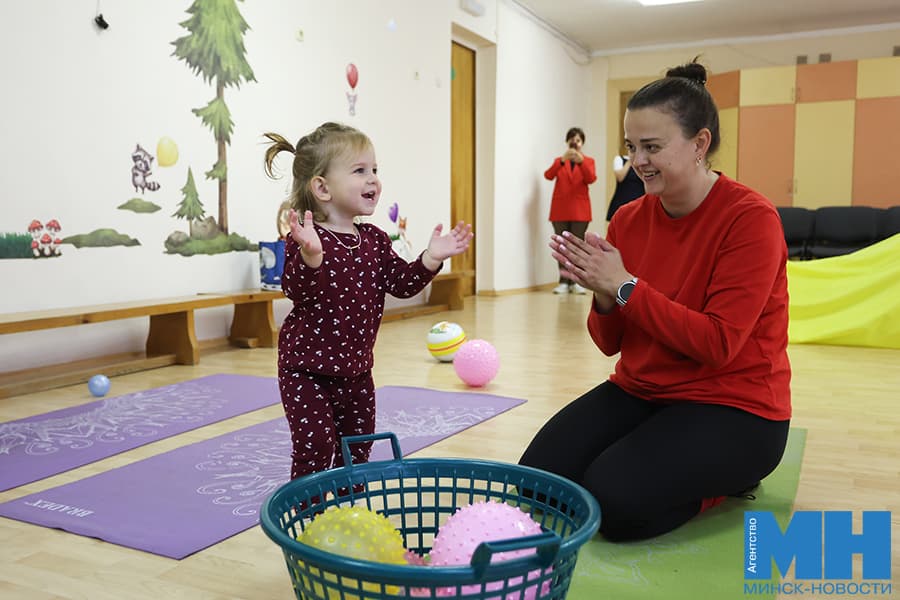
Photo by Irina Malinovskaya