
Why AI won't replace expert linguist, and how a word can become evidence in court
Thanks to linguistic expertise, a word can serve as evidence in court. On the intricacies of conducting such an examination to the correspondent of the Minsk-Novosti agency ...


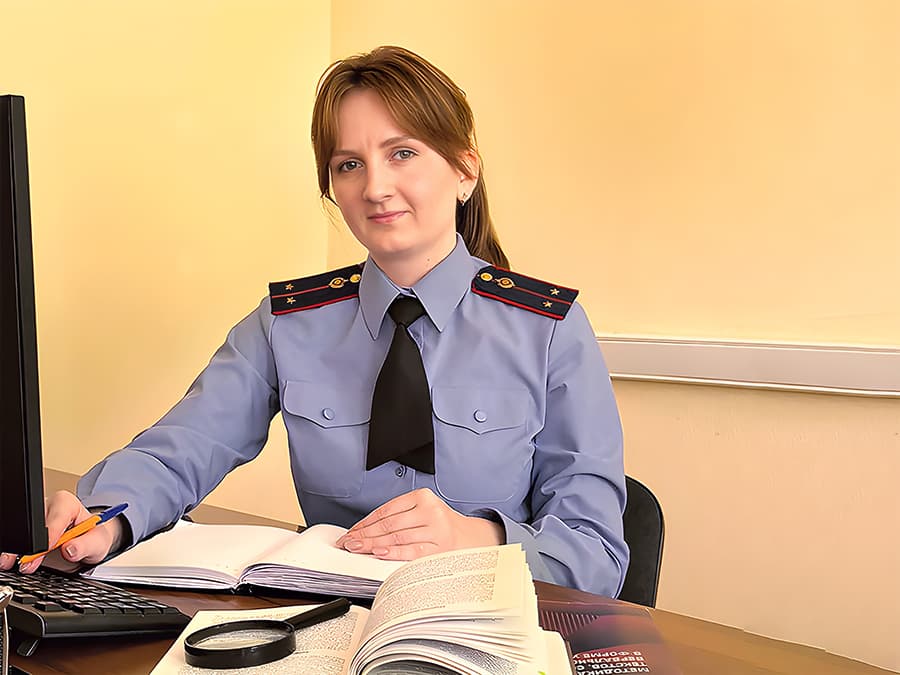
Thanks to linguistic expertise, a word can serve as evidence in court. About the intricacies of conducting such an examination, the correspondent of the agency “Minsk-Novosti” was told by the deputy head of the department of examinations of computer tools and technologies, phonoscopic and linguistic examinations of the department of the State Committee of Forensic Examinations for Minsk Maria Kikot.
In the beginning was the word
Maria Andreevna, what do you use in your work?
The task of forensic linguistic expertise is to establish the content of the studied text. Since the main principle of the expert’s work is objectivity, based on a strictly scientific and practical basis, regulated methodological and dictionary reference literature is used.
- What typical questions are most often asked by investigators and courts to expert linguists?
- For example, in cases related to insult, for the presence of a non-normative negative assessment of the person. In cases of crimes against sexual integrity or sexual freedom, it is specified whether the text refers to objects such as the genitals, parts of the human body, as well as acts committed with them.
Question of form
- What kind of expertise do you usually deal with?
- Most often, this is a study of texts for the presence of a negative assessment of the face, which correlates with such concepts of the legal field as “insult”, “humiliation of honor and dignity”. At the same time, even in this rather obvious category of cases, controversial situations arise: the use of certain words is not always an insult. Conversely, even ordinary, seemingly literary words can express a negative assessment of a person who has a profanity form of speech expression. And their use in speech against other persons is subject to administrative and criminal prosecution.
- Is it true that such examinations are very time-consuming and voluminous?
- Of course, even the analysis of the simplest text can take a long time. Much depends on the context, the form of presentation (e-mail or video on YouTube) and semantic content (commonly used vocabulary or replete with neoplasms that have not yet settled in speech). At the same time, even the presence of an expert linguist with significant experience does not always allow for prompt analysis, since all texts are unique and require a special approach in each case.
- Are there situations when the same text is interpreted in two ways within the law? How do you make the final decision?
- Then the expert concludes that it is impossible to establish a particular circumstance that is prescribed in the conclusion. Most often, we encounter this in the study of small texts, for example, when it is necessary to establish the presence of a negative assessment of a person in a comment consisting of a single word posted in a chat or under a video recording where several people are discussed. In such situations, it is quite difficult and difficult to determine to whom negative evaluation characteristics are attributed. In the absence of arguments allowing to specify the evaluated person, the conclusion is made that it is impossible to establish the object of evaluation.
Man and machine
- Does artificial intelligence help in text analysis or is the living mind of a linguist indispensable?
AI works on the basis of large amounts of data and mathematical algorithms and uses a programming language. Human speech is more mobile and dynamic, completely dependent on the intellectual abilities of the citizen, his experience, level of thinking, imagination and the social environment in which he is. At the moment, these two structures, if they overlap, do not always agree: sometimes artificial intelligence is not able to understand what exactly a person wanted to say in a particular situation, what information to convey. At the same time, one should not forget how often the vocabulary of modern society is updated, how many young and slang words are in our time, new ones appear just at once. Therefore, leaving the analysis of texts to the mercy of AI is too bold.
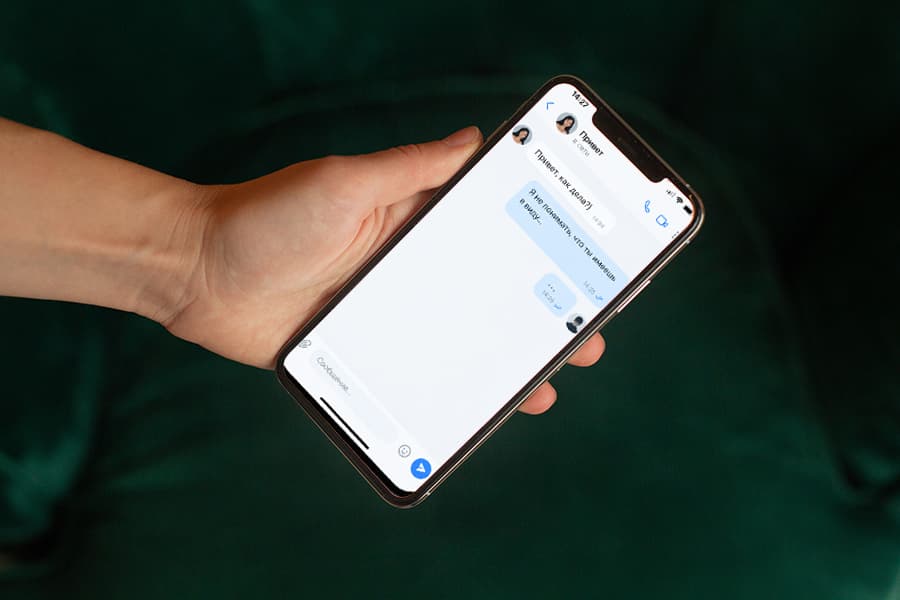
An analogy can be made with automatic translation services that entered human life much earlier than artificial intelligence. However, today the services of a competent specialist in the field of foreign languages are in great demand.
- What are the most unusual or intricate speech constructs you have encountered?
- In my practice, a rather complicated case was connected with the analysis of the speech of foreigners for whom Russian was not the main language. There is a significant number of not only spelling and punctuation, but also semantic errors, which makes it difficult to understand the texts as a whole, since the variability of understanding the structures used is not excluded. Often, the interlocutor with whom the correspondence is conducted saves: how he understood a particular line, what reaction followed it, how the thematic progression of the dialogue as a whole develops. And sometimes the interlocutors ask to clarify what exactly the sender of the message wanted to say.
- Do you notice professional deformities in your everyday life, such as the habit of analyzing every word of friends or texting from strangers?
- Constantly - no, but to observe the speech habits of unfamiliar people interesting. After all, often information about the small homeland of a person, his profession, age can be obtained from a relaxed conversation with him, hearing the features of pronunciation, used vocabulary and phrase construction.
Photo from the Internet


