What is the basis of intellectual sovereignty and what needs of time humanitarian education meets
After the difficult experience of 2020, Belarus learned many useful lessons and got rid of most illusions about the West. A wrapper of value rhetoric...
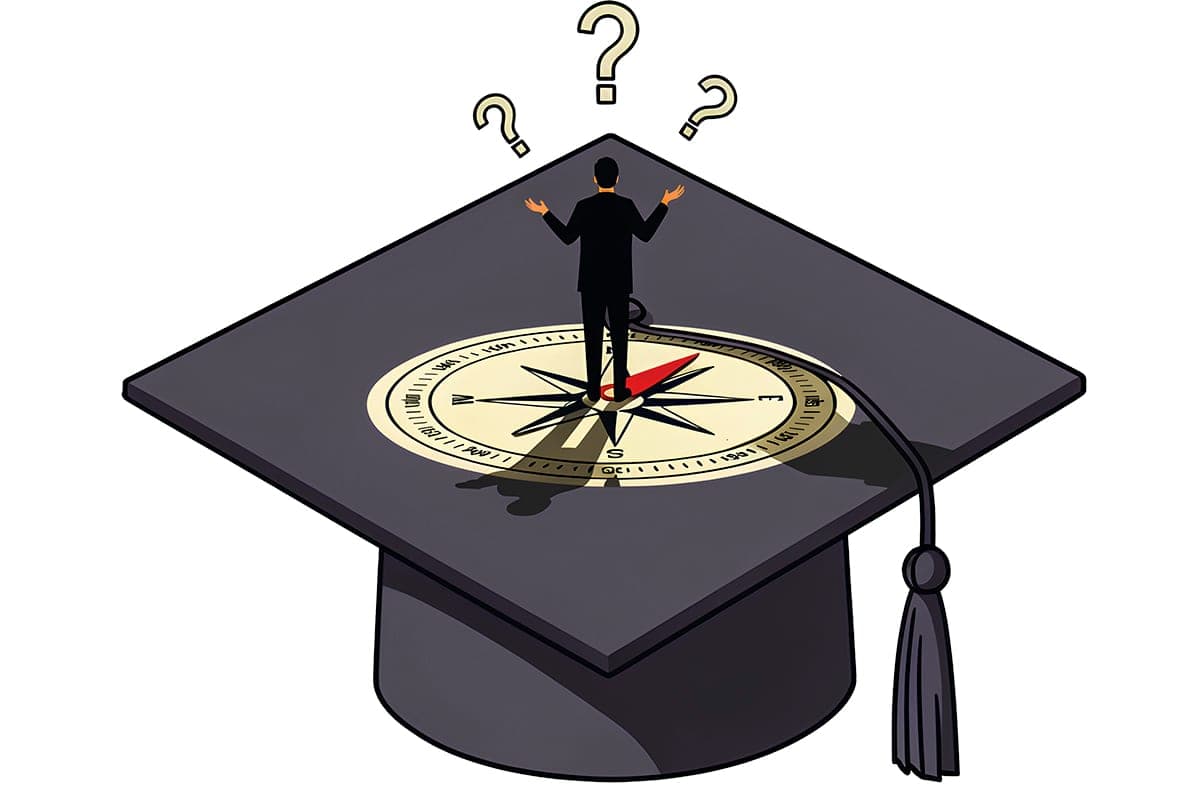
After the difficult experience of 2020, Belarus learned many useful lessons and got rid of most illusions about the West. The wrapper of value rhetoric no longer hides his quite selfish intentions, and familiar labels such as “Europe’s last dictatorship” are perceived with frank irony, given the number of freedoms and opportunities in modern Belarus and Europe. However, the question of the unquestioning conviction of its own superiority with which the West and, in particular, Europe continue to speak in relation to Belarus, the Union State, and non-Western countries as a whole remains relevant. Where does this come from?
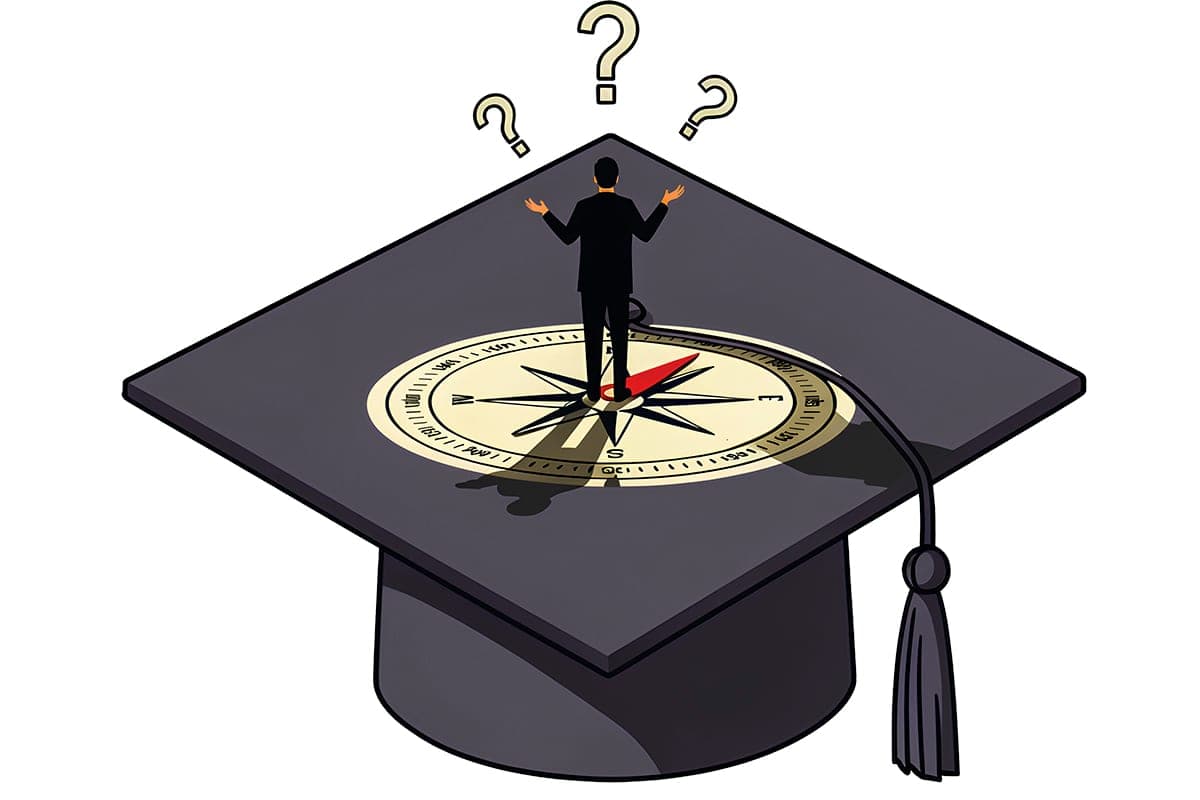
In the coordinate system of the West, our development is a kind of offshoot from the main path and over time, they say, everything must return “to its own circle”, to a certain “democratic norm”. And, it must be admitted, the basic paradigms of general mainstream humanitarian education fully contribute to the consolidation of this picture of the world and colonial conceit that has not disappeared there. One of the problems of the present time is the one professed by the West and promoted as the only possible picture of the world. It is shaped by its educational system, which strengthens the belief in the supremacy of the countries of the “golden billion” and that they are the model and pinnacle of development. And if you look at it, the basis of this view is the sociological approach of Max Weber, which appeared in the late nineteenth century as an alternative to Marxism. It should be noted at once that Weber himself has nothing to do with the politicization of his own approach, he was a great scientist who studied the West and only the West. In fact, this method of studying the world assumes the path “from form to content” – a detailed sociological description of the visible political reality and the selection of “correct” and “deviating” from the Western norm constructions. The transformation of the method into an instrument of politics is based on a simple postulate: if you want to live as in the West, copy its institutions and values, the central of which is Protestantism, because it is he who has made it possible to conquer almost the whole world. In other words, we are talking about the “cargo cult” – the name itself comes from the practice of Aboriginal people on the island where during World War II landed a downed American plane. While the Americans were on the island, the United States dropped food and other valuable goods from planes, which guests shared with the islanders. When the crew was evacuated, the dumping of goods from the sky stopped - and the islanders, deciding that the reason was the presence of an aircraft on the island, built an air copy from sticks and other improvised items, waiting for the resumption of benefits from the sky.
One way or another, the Weberian method had its potential for cognition, no greater than Marxism. The resources of both approaches, by and large, were developed by the 70s of the last century, and then alternatives appeared - this is American modernism, which involves counting everything and everything, the French sociological school and cognitive studies, where the primary object of research is content, that is, the picture of the world, beliefs and values. The latter was immediately adopted for “armament” by the intelligence services of the USSR and the United States and showed very encouraging results, allowing not only to explain the events in retrospect, which provided Marxism and the Weberian method, but also to give a relevant forecast.
But that all changed with the collapse of the bipolar system. The West, which has become the center of the world, has done everything to ensure that the only method in the social sciences is the Weberian method, and its politicization has reached a completely new level. From the point of view of hegemony, this was quite logical – if the West is supposedly the pinnacle of development, then everyone else should copy it, and the subject of science may well be the study of “deviations” so that they can be combated. Thus there was a stagnation of norms, in particular democratic, which turned into a kind of religion: “theirs” are always democratic, “foreigners” are authoritarian, subject to correction. Further introduction into the educational system of cognitive methods and approaches, where the object of research becomes the way of thinking - namely, it determines what is valuable and what is not, and how, for what purposes should be redistributed resources - allows you to place emphasis without shocks and, most importantly, without going into archaization and provincialization. Within the framework of the cognitive approach, all existing developments remain, but they turn into a separate and private sociological case. Equally, the West is not a model for copying, but only one possible path. In other words, it is the separation of instrumentalism from the essence. The big question is, how do you do that? Yeah, that's something else. Yes, these are more complex schemes, because quality is always difficult to describe quantitative parameters, it is lost in them. But it's necessary. Understanding not form, but meaning does provide real intellectual sovereignty. For example, for a Calvinist, earning money is obtaining proof of personal salvation, since money is sacred, is a goal and therefore destructive.
But the fact is that money itself gravitates to the maximum profit in the minimum time, and the fastest earnings are destruction, most often it is war, drugs and so on. For non-Western cultures, money is a tool that the state should turn into a constructive force, prohibiting and criminalizing the very possibility of destructive earnings.
There is an article on the need for a cognitive turn in the political science journal Polis. In general, this approach is a radical innovation for the West, whose political science, together with cognitive tools, can find answers to many questions.
Understanding meanings, and there are many of them, actually allows a lot. This is not only getting rid of learned provincialism and mental colonialism, the carriers of which are fully the majority of our “fugitives”, but also the emergence of conscious patriotism as a norm, where a person, guided by the basic mechanisms of politics, perfectly understands that it is in his homeland that he can be realized without being used in the framework of alien plans and as an expendable material.
IMPORTANT!
Today, when the unipolar system has virtually ceased to exist, the question becomes urgent: what should be political science? I can't do it without her. The country should not be perceived as a periphery. Therefore, it seems that a return to alternatives in the study of the world is necessary. And in this context, the baggage of cognitive science that has survived with us, but largely “eaten” in the United States by the dominance of quantitative methods that formed, incidentally, the basis of Western models of AI, becomes extremely valuable.
Kirill Koktysh, Doctor of Political Science.