Gynecologist Anna Luzan - about delayed motherhood, egg stock, Down syndrome, NIPT and doubles
Only a couple of decades ago, a 25-year-old woman in labor could be called an offensive word “old-born”. Today, it is more of an ironic smile.


Only a couple of decades ago, a 25-year-old woman in labor could be called an offensive word “old-born”. Today, it causes an ironic smile and is no longer used in the medical environment. However, more and more young women postpone the birth of children for later. Study, career, travel, search for the perfect partner. But you can not argue with nature: the reproductive system works worse over the years, and the chances of having a healthy child after 40 years are less and less. However, they remain, the main thing is the right approach. This is our conversation with the gynecologist of the Minsk City Clinical Endocrinology Center Anna Luzan. The biologically optimal age for pregnancy and childbirth is 18-29 years. If a 20-25-year-old girl has a 25 percent chance of pregnancy in a particular cycle, then at 40 years old it is already 10 percent. The ability to conceive and bear a child is affected not only by age, but also by chronic diseases, hereditary pathologies, body mass index, arterial hypertension, diabetes, renal pathologies, endometriosis, active oncological process, taking drugs incompatible with pregnancy ... Therefore, all these issues must be dealt with before conception.

Men do not have a sharp age limit. But after 40 years, the risk of chromosomal abnormalities is also high. Studies show that some neuropsychological diseases of the baby can be caused by the age of the man. For example, 40- to 49-year-old fathers are six times more likely to develop autism than 15- to 29-year-olds. And in boys, autism is more common.
Pregnancy itself is a complex energy-consuming state. A kind of hormonal restructuring, during which the levels of estrogen and progesterone increase. With age, the supply of eggs decreases. They begin to emerge even in the fetal period. At the 20th week of pregnancy, millions of eggs are formed in the ovaries of the female fetus. By the time of birth, their number is reduced to 1-2 million. By the beginning of puberty, about 300,000 to 400,000 follicles remain. And each menstrual cycle burns off some of that reserve. By the age of 40, about 3-5 percent of the initial reserve remains in the ovaries.
The quality of the remaining eggs deteriorates, which is associated with the natural aging of the body. It is impossible to stop or weaken this physiological process. It goes even during pregnancy, lactation and taking hormonal contraceptives.
At the same time, there is an important marker that helps to roughly assess the supply of eggs, the antimuller hormone. But it does not directly reflect a woman’s ability to conceive naturally, nor does it answer the question of how many years remain for motherhood. A low indicator indicates primarily a decrease in the ovarian reserve. And perhaps you should hurry with pregnancy or consider freezing eggs.
It is very important at least three months before the planned pregnancy to close all questions on chronic diseases. Be sure to visit a therapist and dentist. During pregnancy, calcium is actively transported from mother to fetus: it is necessary for the formation of the skeleton, teeth, muscles, nervous system and other important structures of the child.
Hence the decrease in bone density in the mother, the risk of osteoporosis in the future, increased blood pressure and protein levels in the urine, muscle spasms and paresthesia, fetal growth delay and low birth weight, poor mineralization of bones and teeth.
Before pregnancy and in the first trimester, iodine and folic acid preparations are mandatory (under the supervision of a doctor). In some cases, you may also need to take iron, vitamin D, calcium and other trace elements. After 35 years, the risks of various mutations, including chromosomal ones, increase. Hence a more thorough examination. The first genetic screening is done at 11 to 14 weeks. Consultation of a geneticist is also mandatory. If in 30 years the risk of having a child with Down syndrome is about one case in 712 pregnancies, then in 40 years - already by 86. Therefore, geneticists may recommend amniocynthesis: the study of amniotic fluid. They contain fetal cells, microorganisms and chemicals that make it possible to assess its health. This is the diagnosis of genetic disorders and chromosomal abnormalities, the identification of hereditary diseases, mutations in DNA and intrauterine pathologies (toxoplasmosis, cytomegalovirus, rubella, bacterial infections).
NIPT, a non-invasive prenatal test, can tell a lot. He accurately assesses the risk of chromosomal abnormalities in the fetus by a blood test of the mother. During pregnancy, it has fragments of fetal DNA coming through the placenta. NIPT allows you to identify Down, Edwards, Patau syndromes. You can also check violations of the number of sex chromosomes (X and Y), determine the Rh factor of the fetus. By the way, according to some studies, the DNA of the child remains in the blood, tissues and organs of the mother for many years, and sometimes for life. And this is called fetomaternal microchimerism. As soon as a woman becomes pregnant, she begins a series of examinations. Three main screening ultrasounds are also required: from the 11th to the 14th week, from the 18th to the 22nd and from the 32nd to the 35th. The International Association for Ultrasound during pregnancy has proven that ultrasound does not harm the fetus. But with the Doppler study, studying the blood flow in the vessels of the fetus and its nutrition, you need to be careful. Sometimes the doctor may suggest listening to the heartbeat of the baby. The main thing is not long. Working, Doppler causes tissue heating, it can be potentially dangerous for the embryo with prolonged exposure.

In women over 30 years old (and especially after 35), the probability of having twins increases significantly. The main reason is hormonal changes and fluctuations. As you approach menopause, your ovaries are less stable. The level of follicle-stimulating hormone may increase, which sometimes leads to the maturation of several eggs in one menstrual cycle. It's possible birth and triplets.

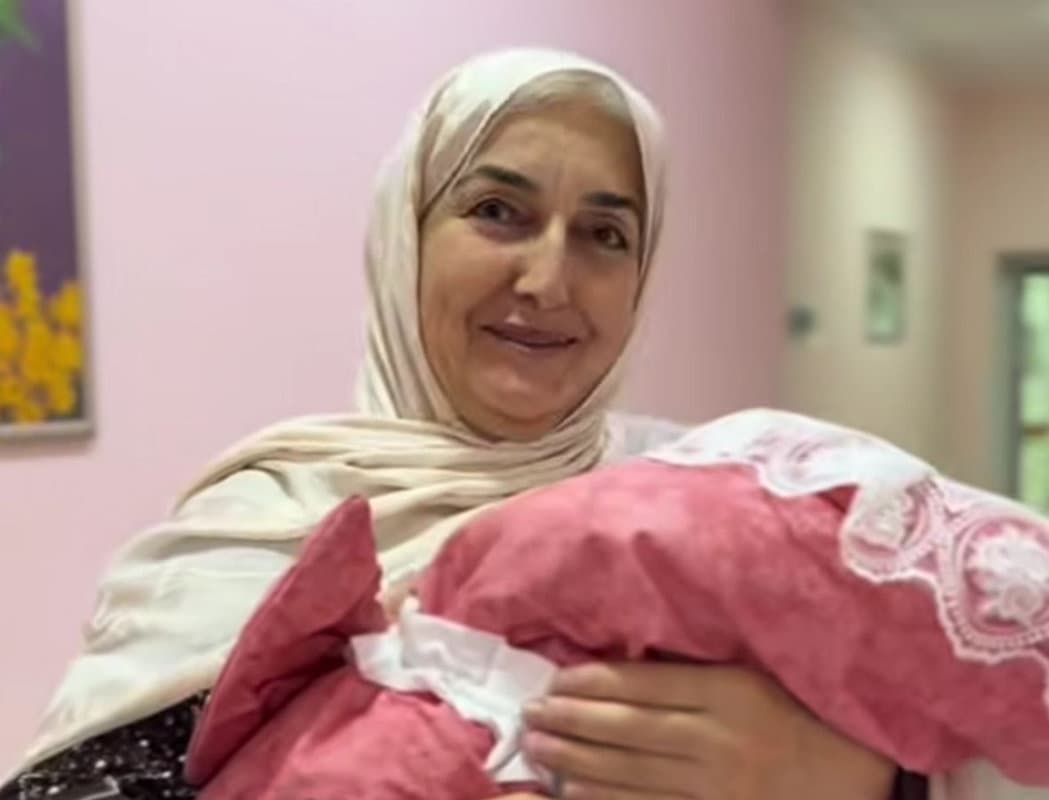
Pregnancy after age 35 is an increasingly common life scenario. Competent training allows you to safely carry and give birth to a healthy baby. Only in Azerbaijan, 63-year-old woman gave birth to her first child
A unique case of late motherhood has been recorded for world medicine. The woman carried and gave birth to a healthy baby. The long-awaited event came after she struggled unsuccessfully with a diagnosis of infertility for 38 years. Thanks to the capabilities of modern reproductive medicine and the professionalism of doctors, the long-term dream of motherhood has finally come true.